Introducing Asteria!
Published on 2026-09-30 by Stuart Spence
I'm making a new game.
There's a game from 1995 called Stars! that I grew up with and still love. It's a sci-fi turn-based strategy game where you "explore, expand, exploit, exterminate" a universe filled with "stars" (planets) and other empires.
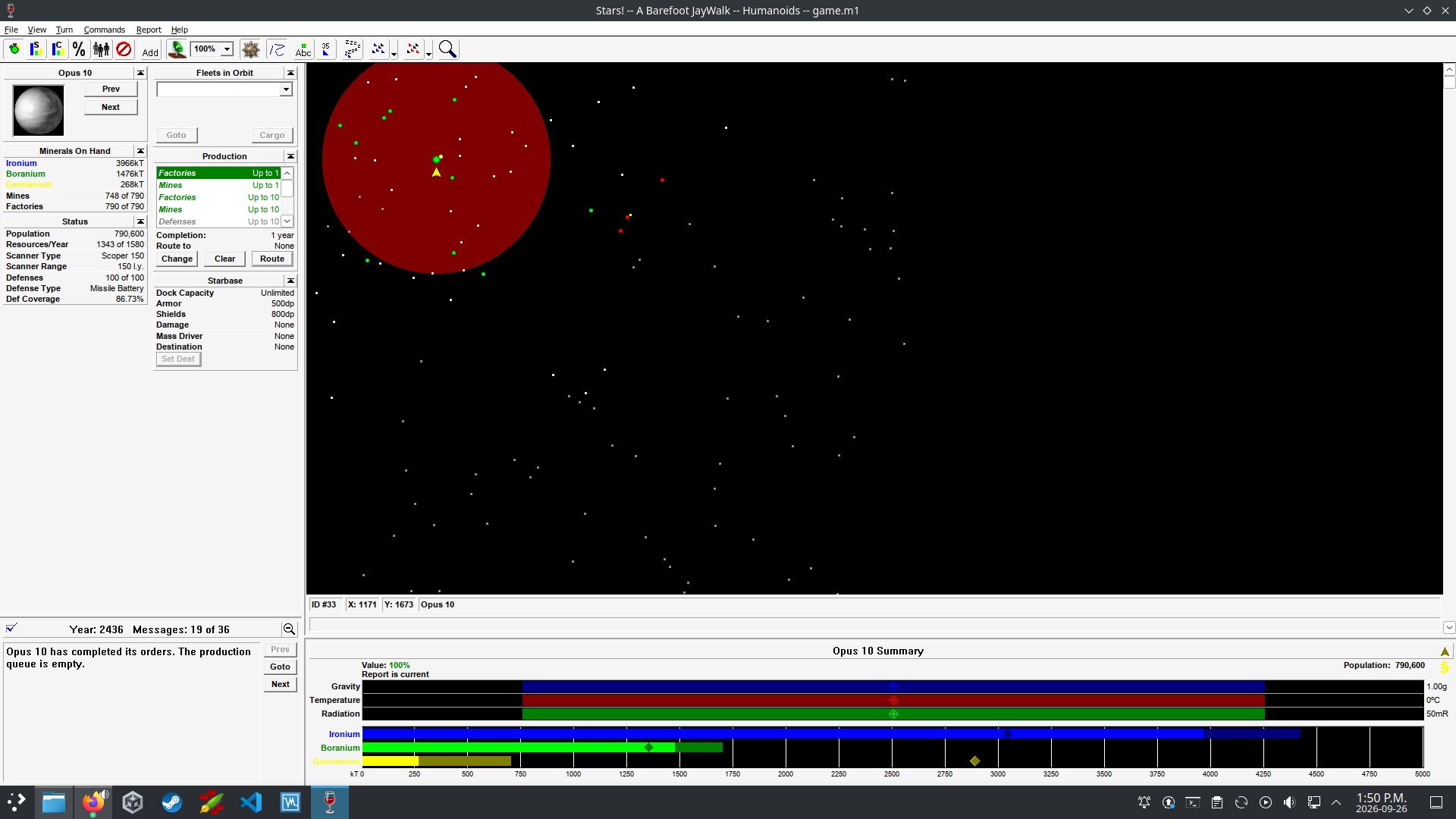
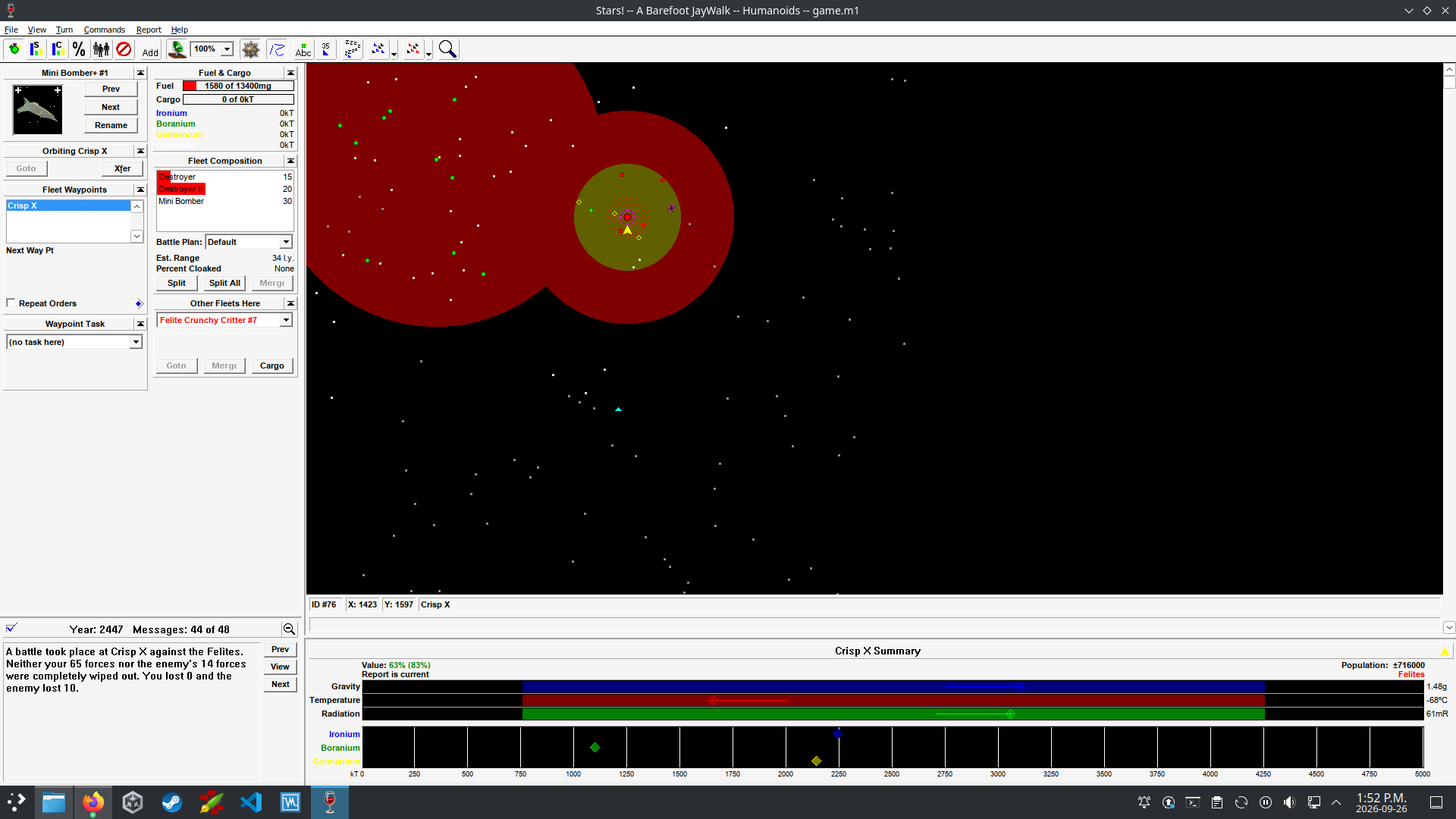
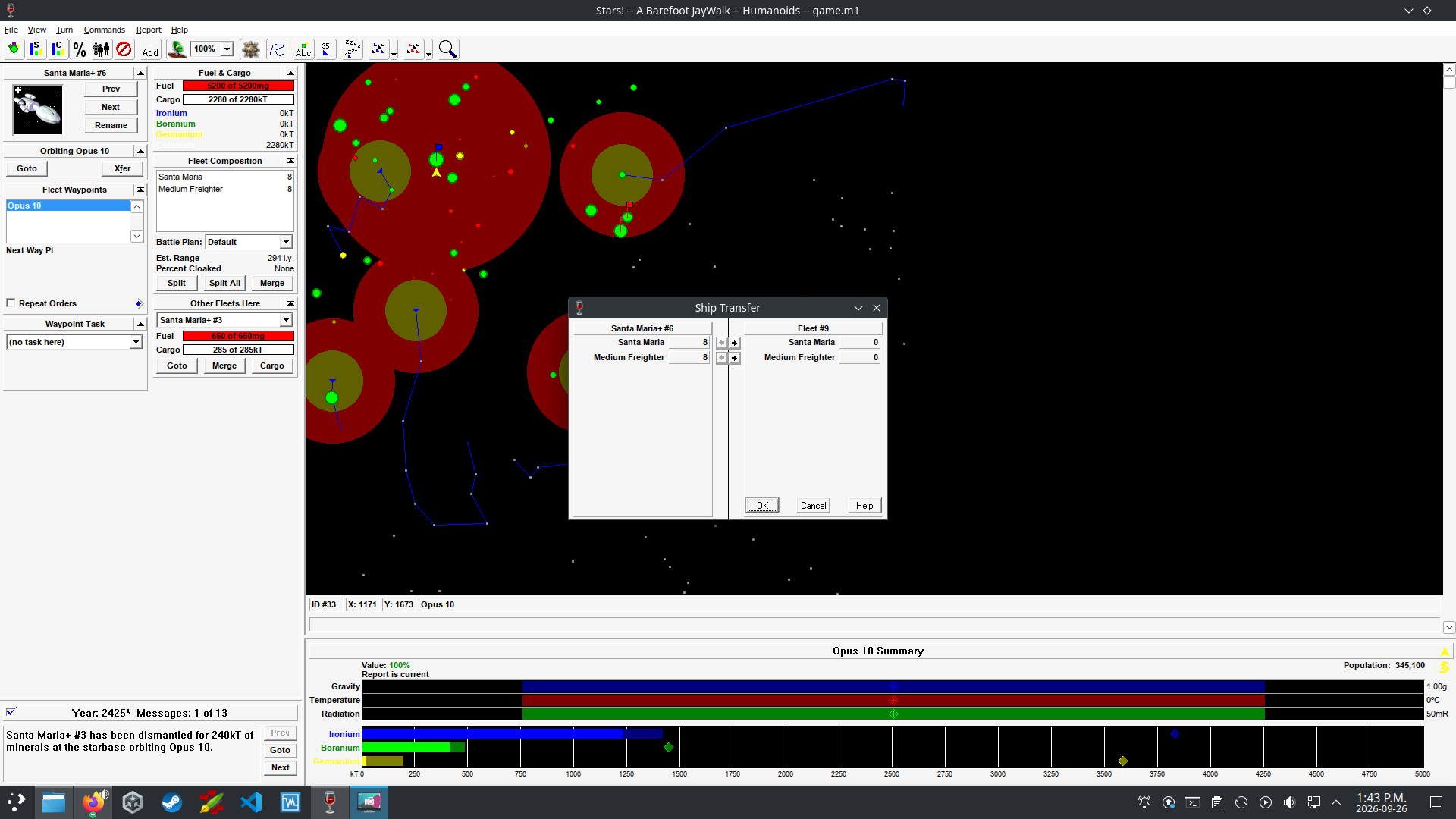
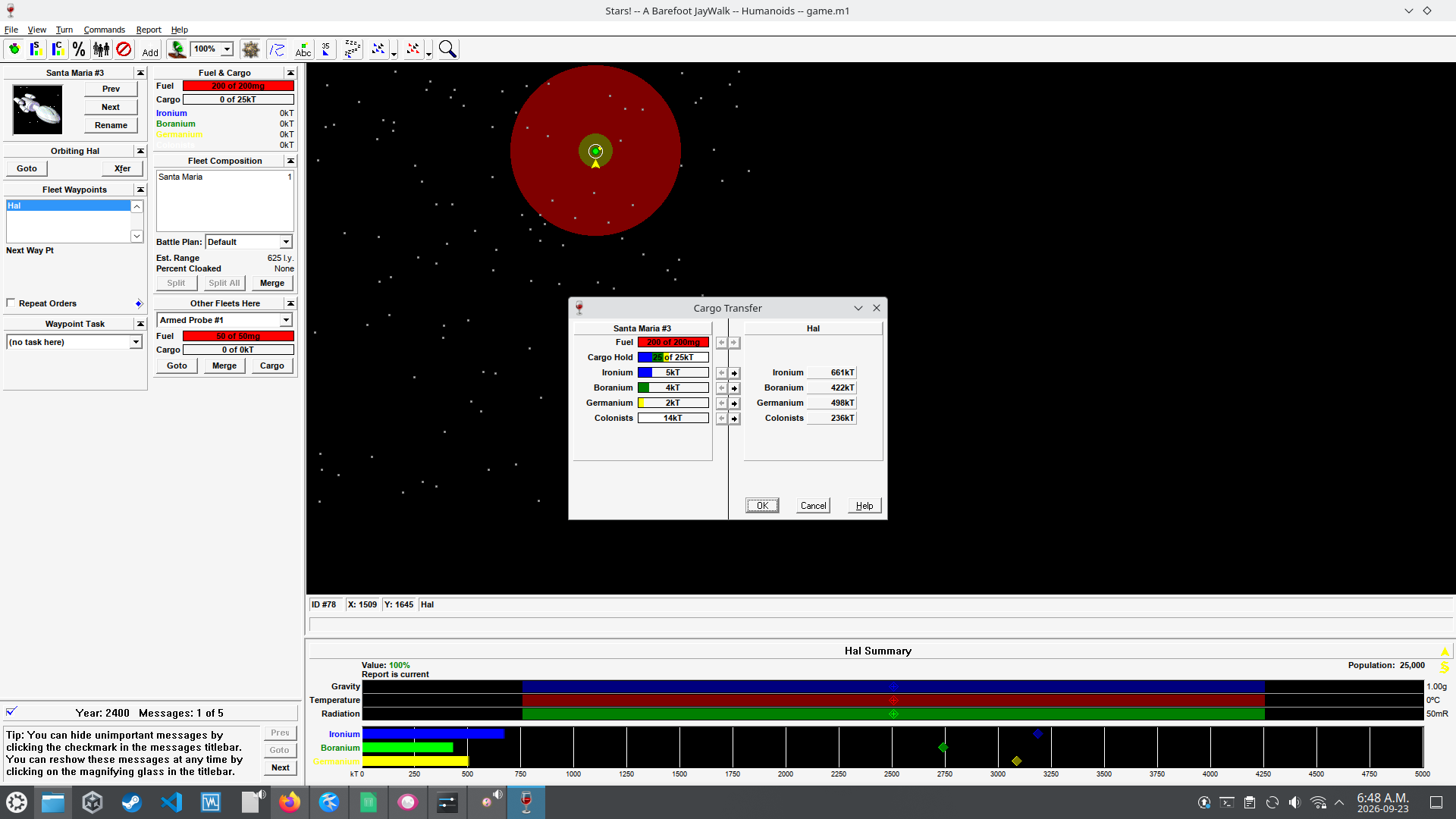
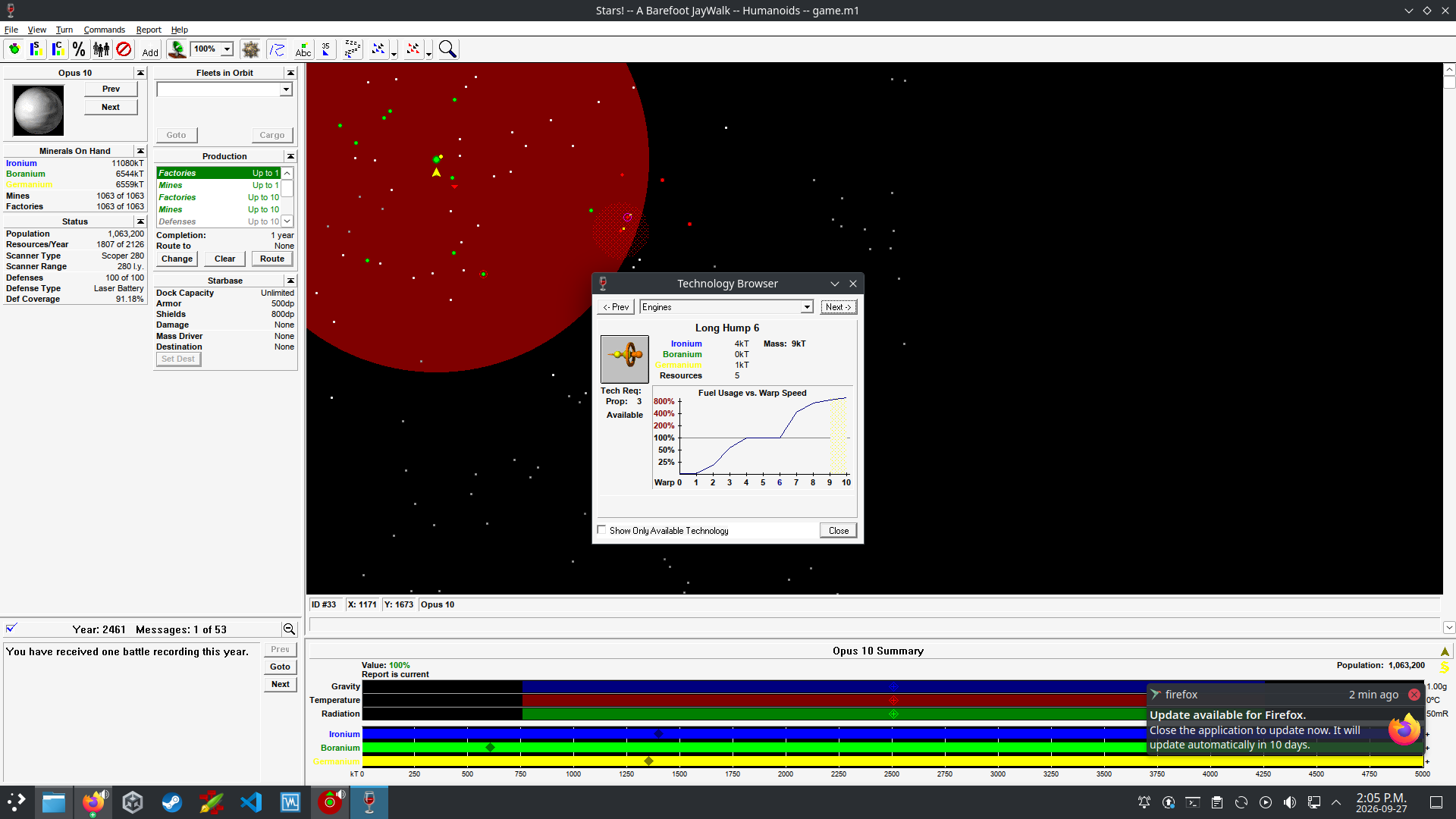
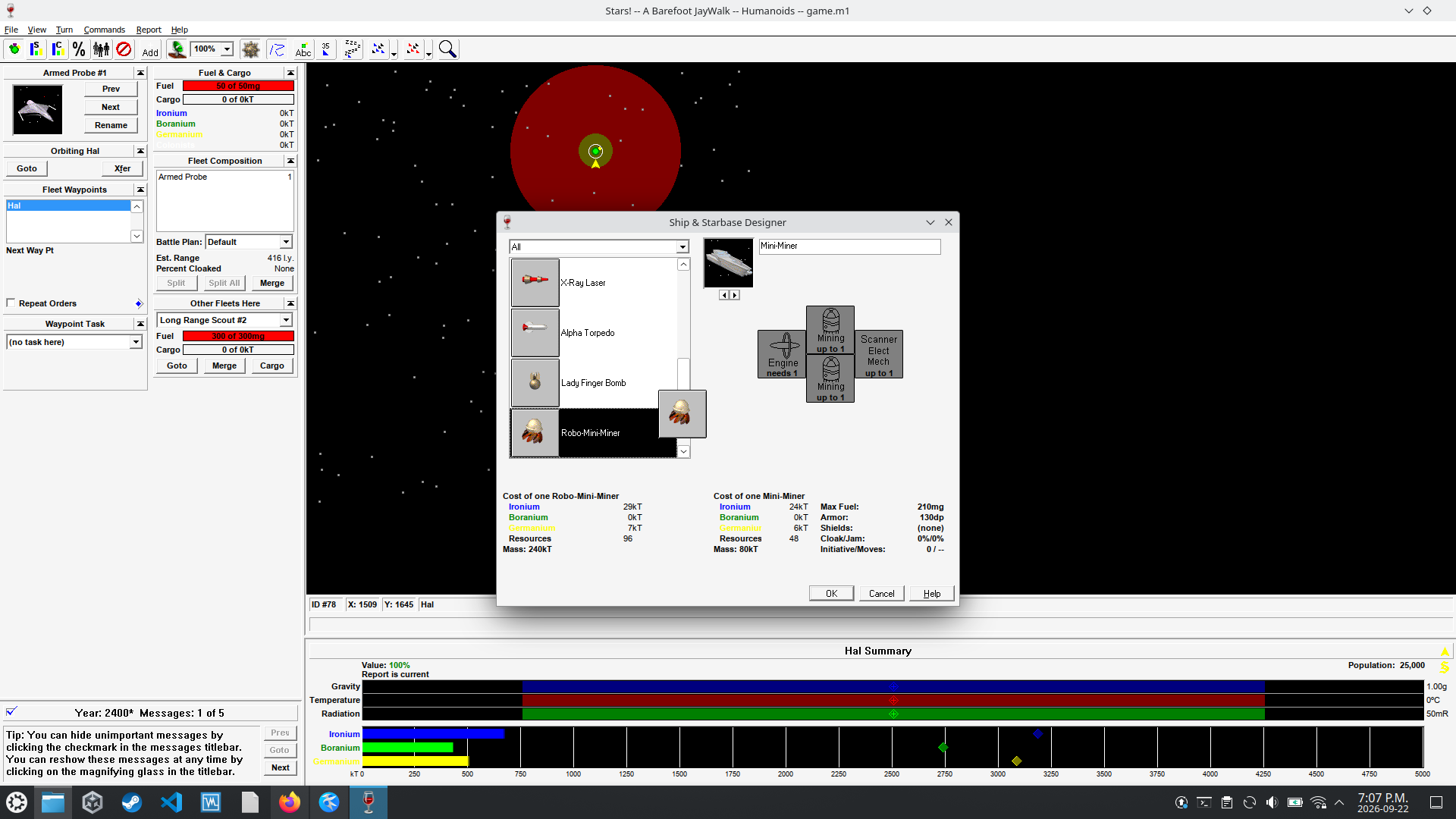
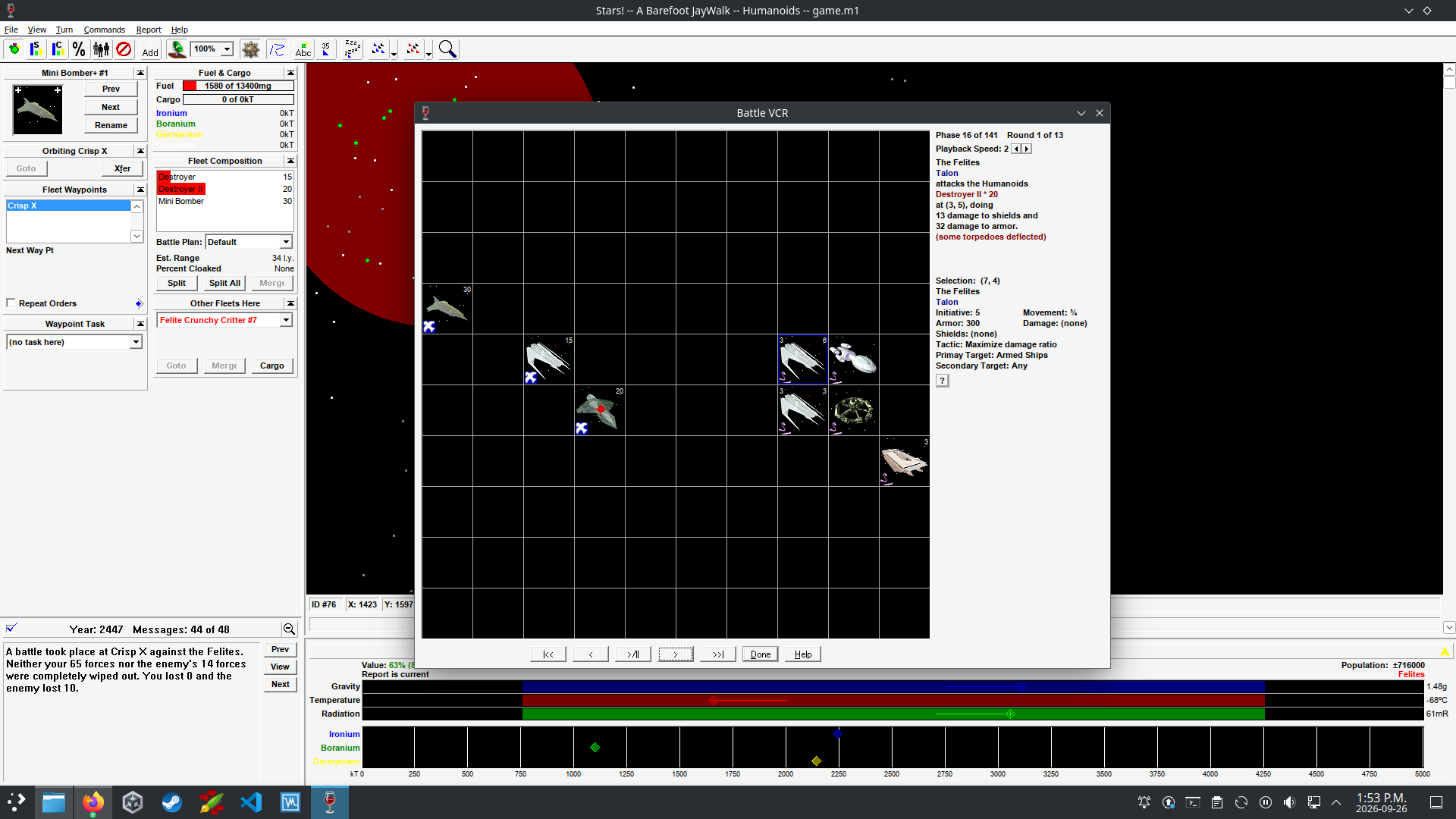
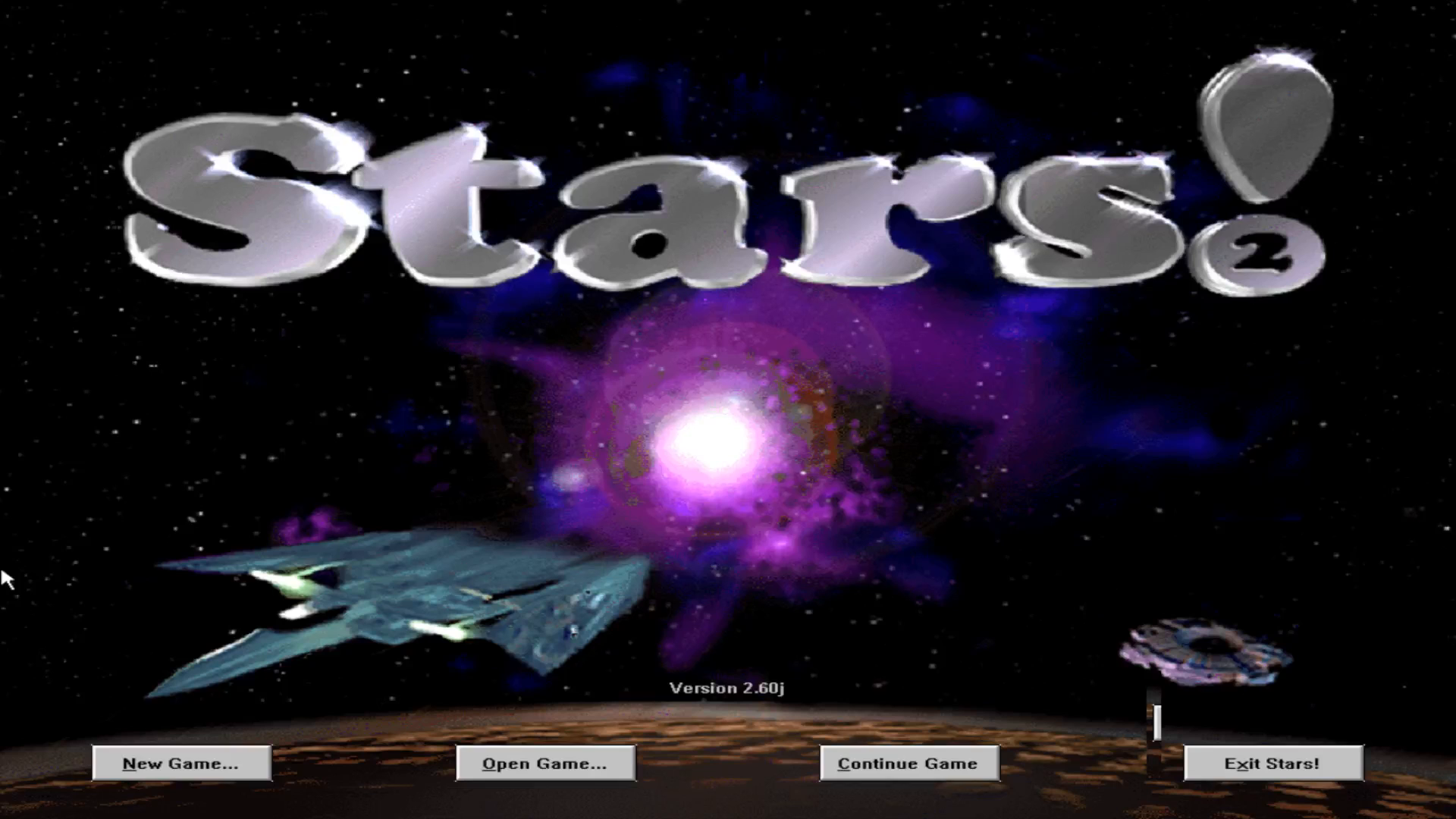
From Wikipedia:
While it received generally positive reviews for its depth and multiplayer focus, its complexity and single-player appeal were criticized.
And so naturally I've always felt this "spreadsheet" game needed more complexity. So this summer I started a prototype called Asteria ("αστέρια" is Greek for "stars"). I'm having a blast building and playing it. I started with the visual style and core mechanics of Stars! and added a lot of fun and features that I've always felt were missing.
Screenshots
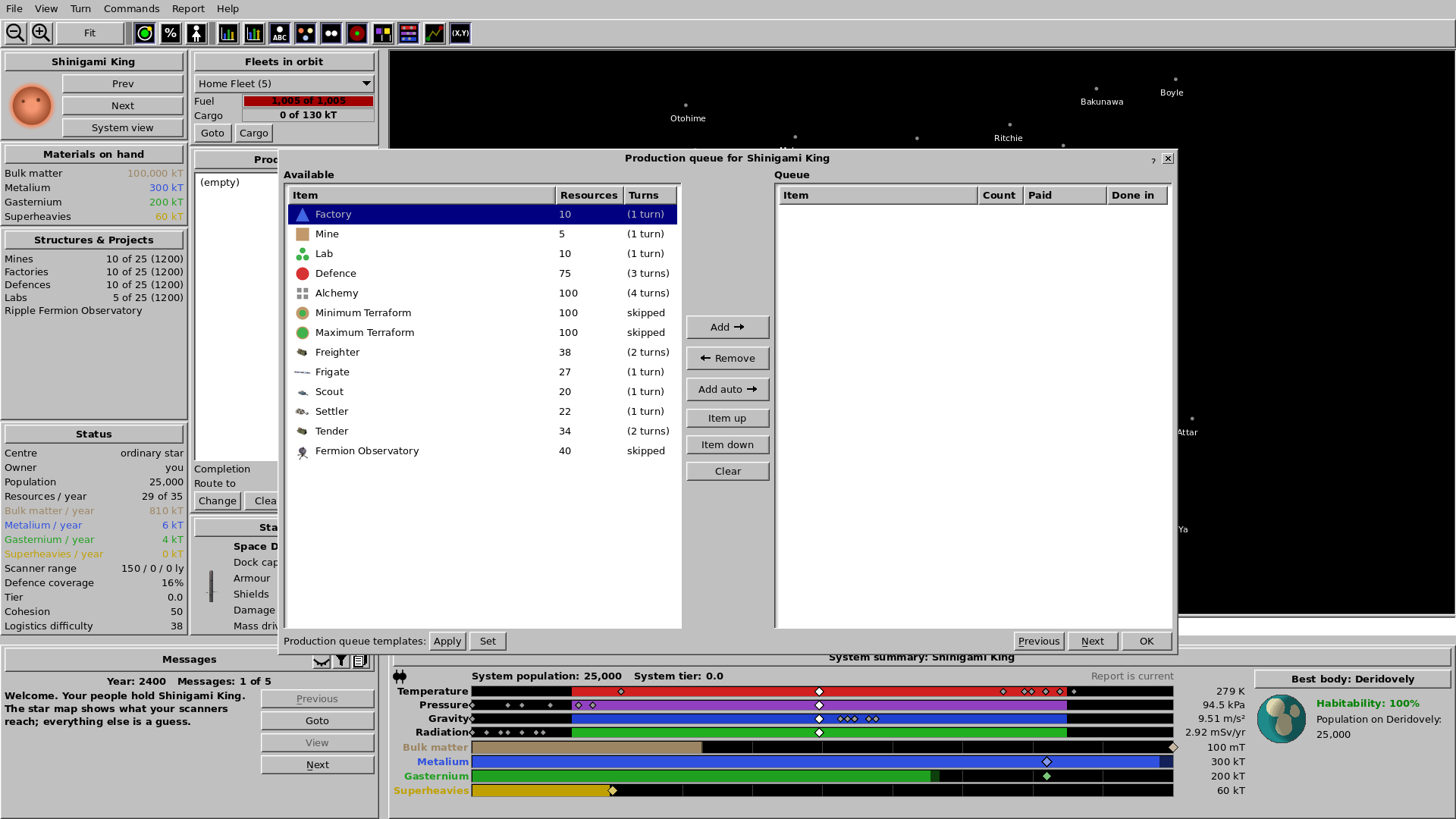
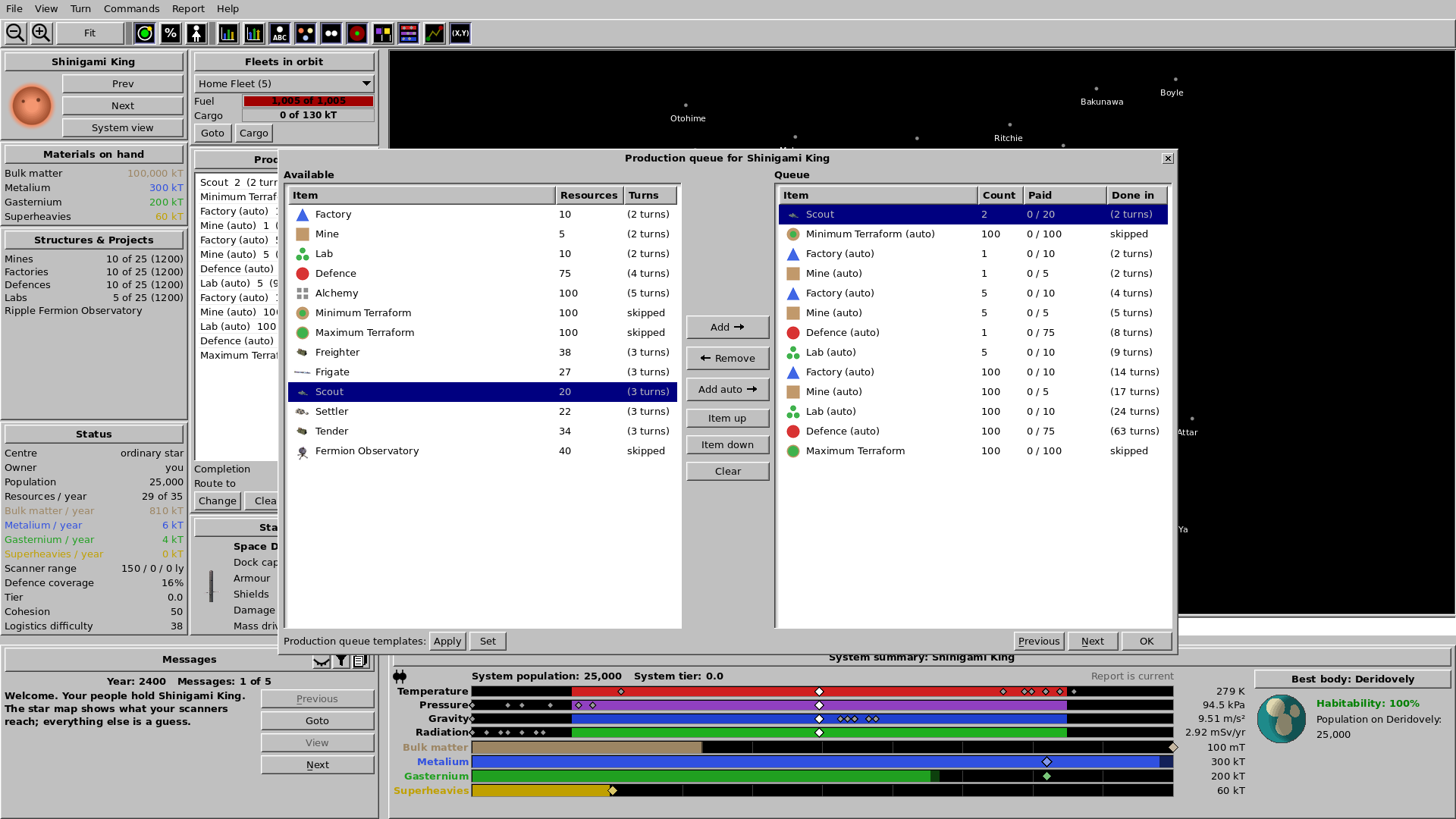
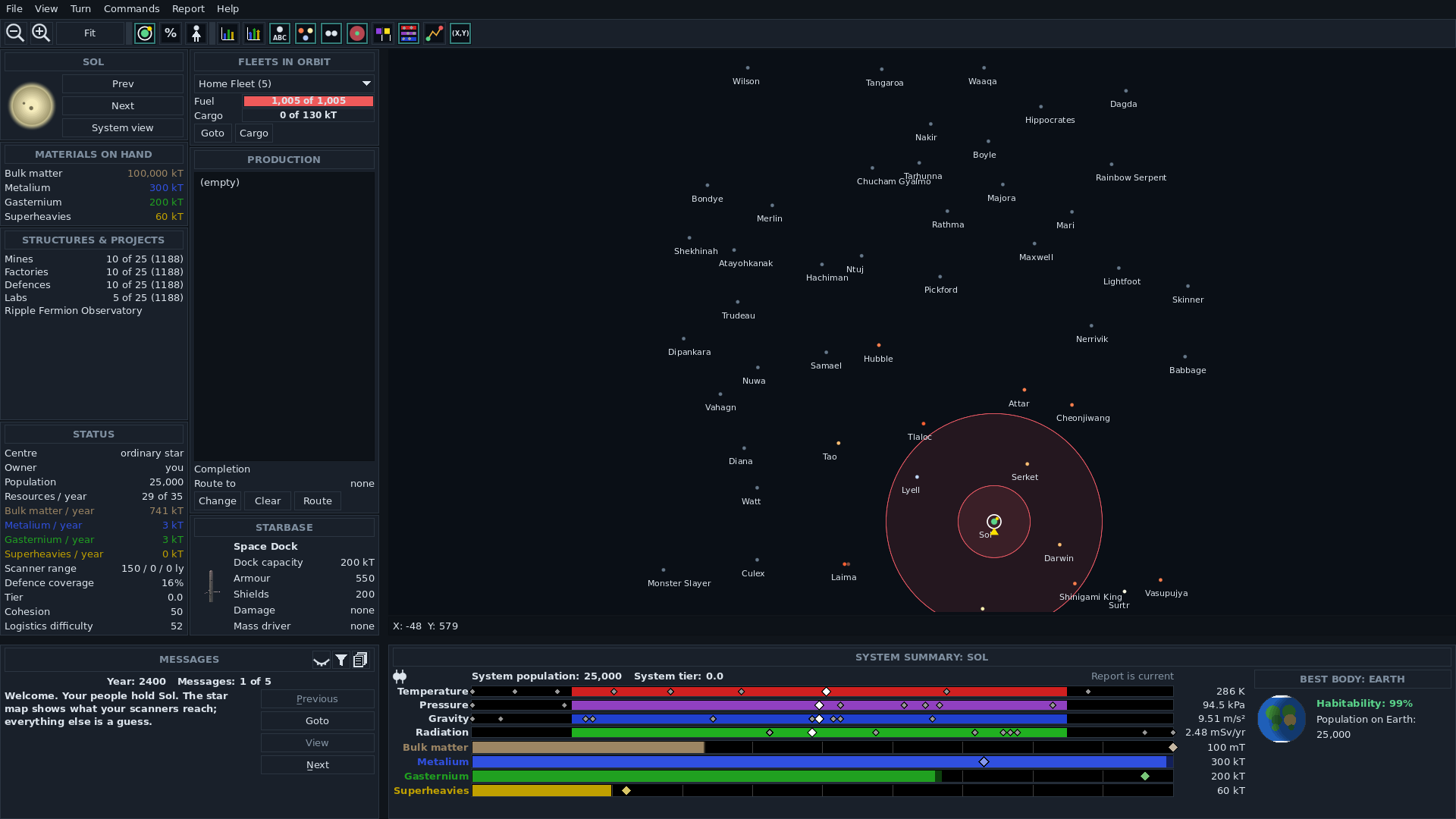
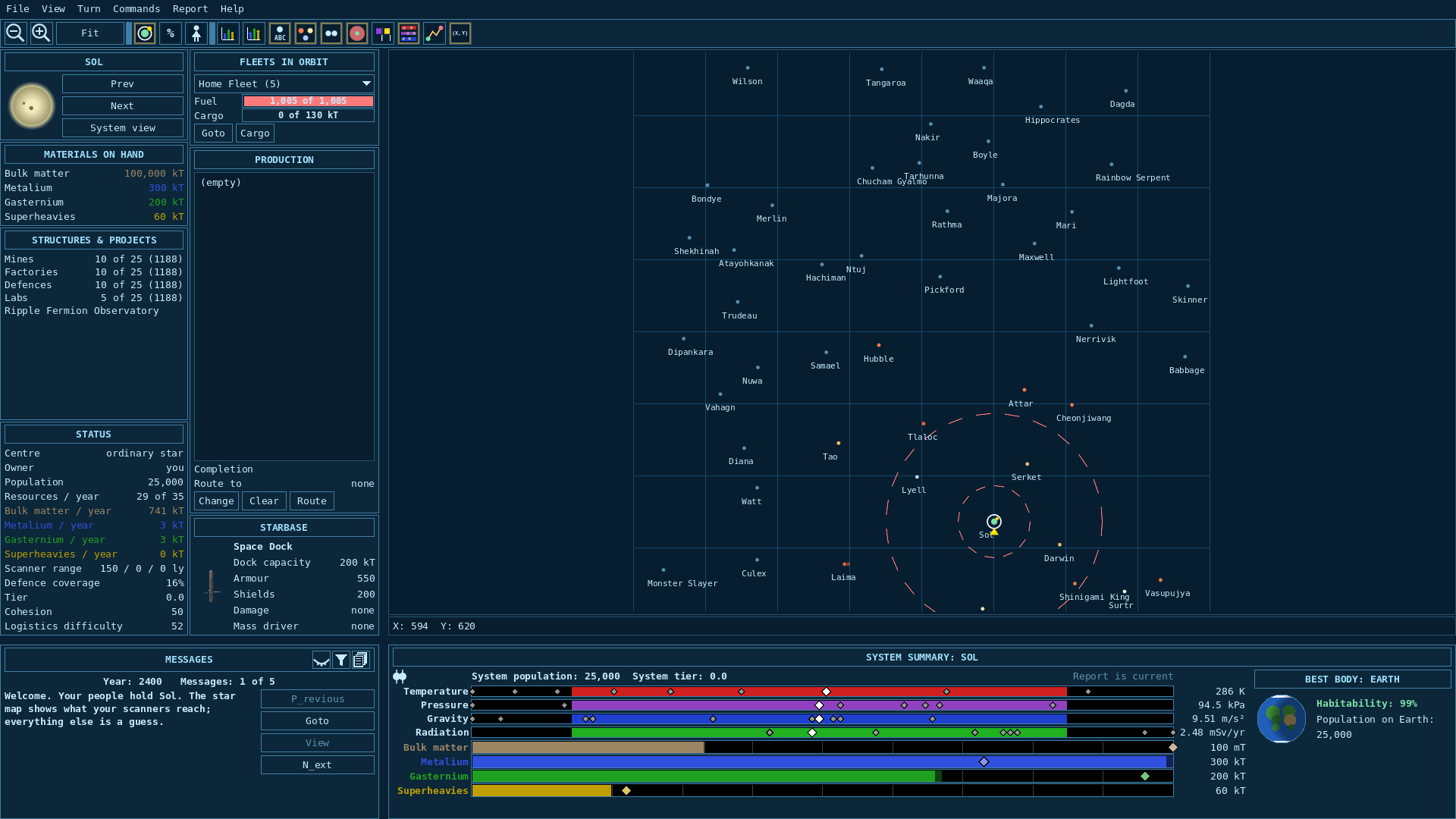
Asteria today lacks polish but the game works well enough for me to enjoy playing it. Here it is!
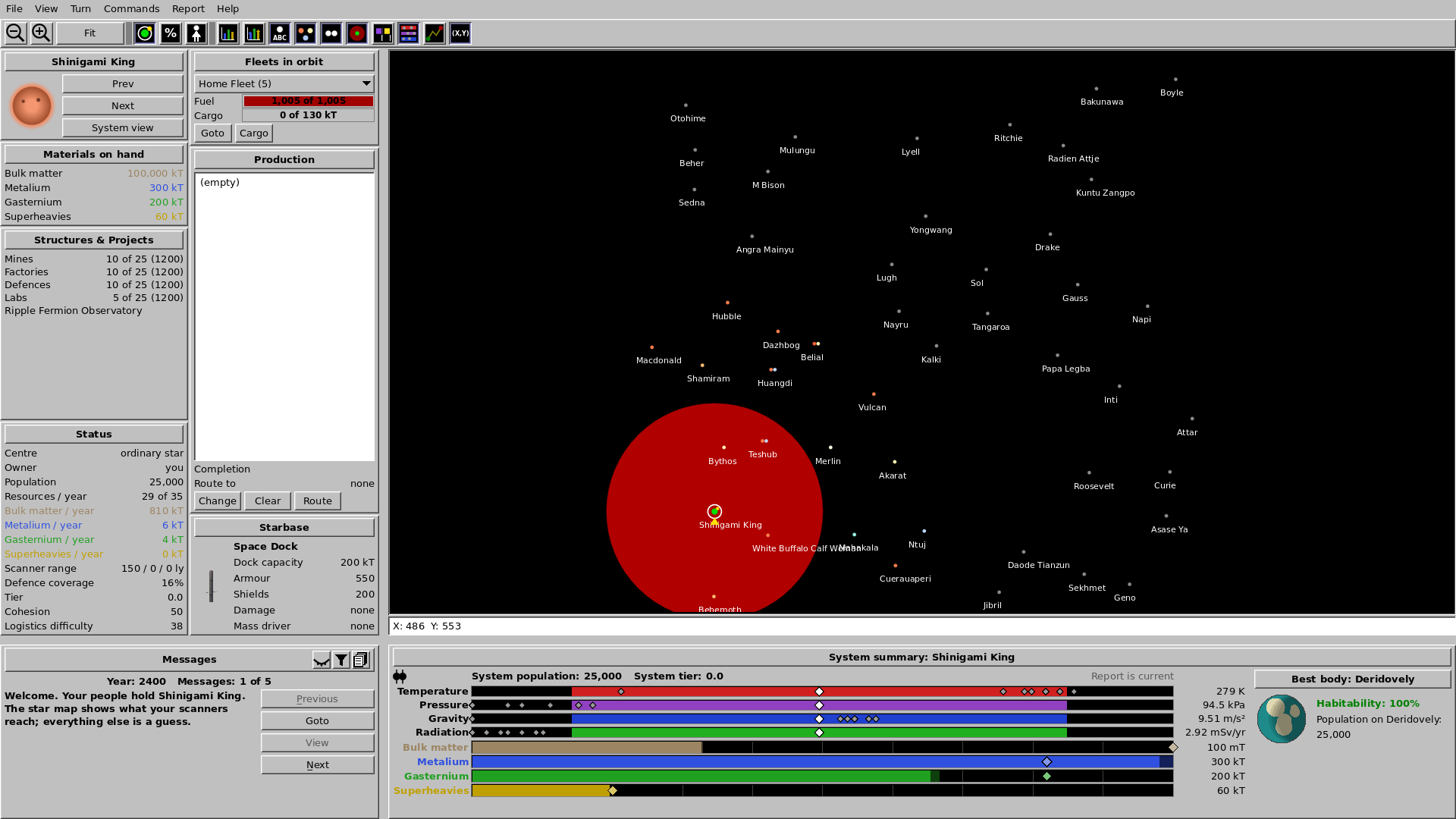
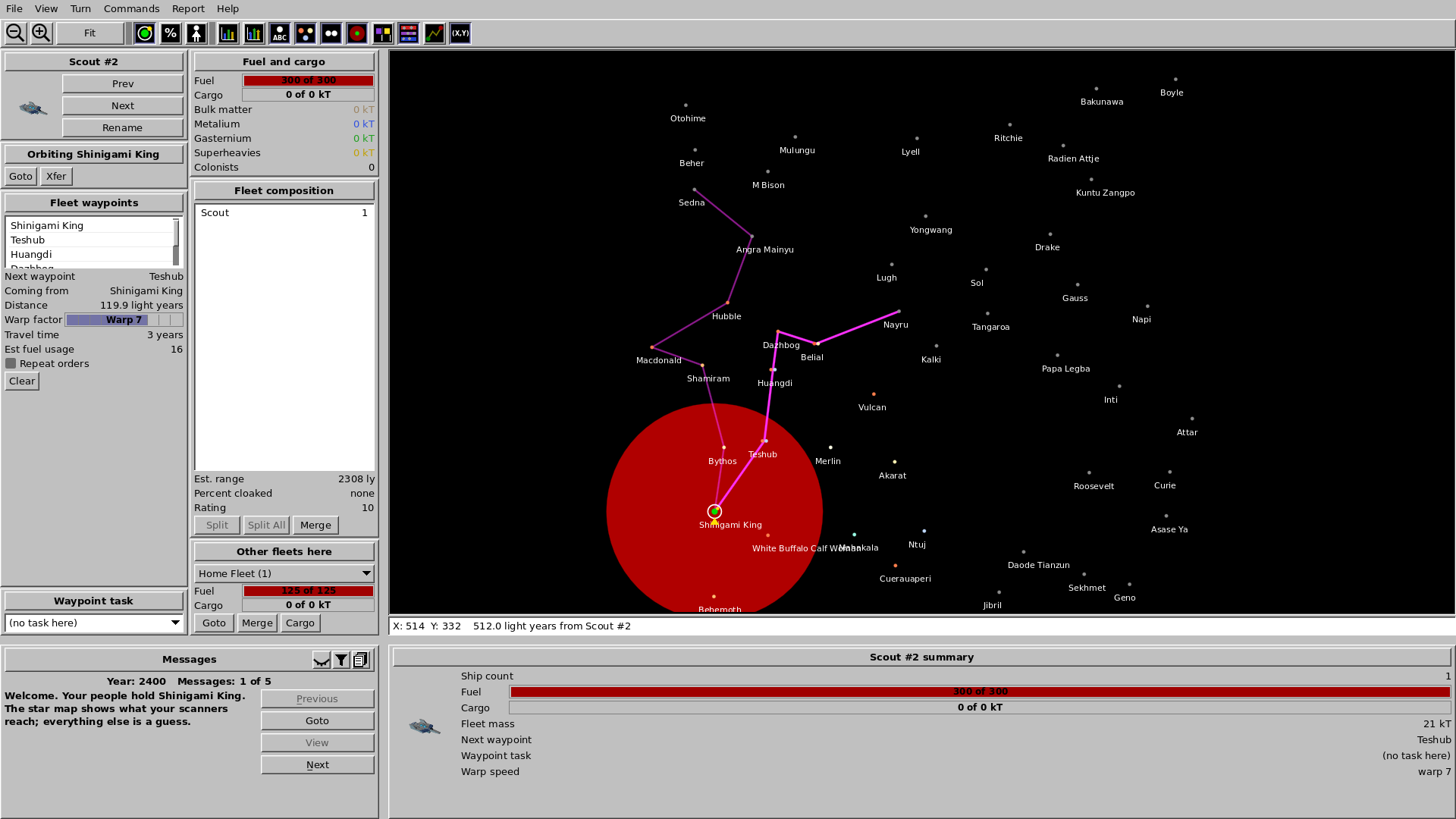
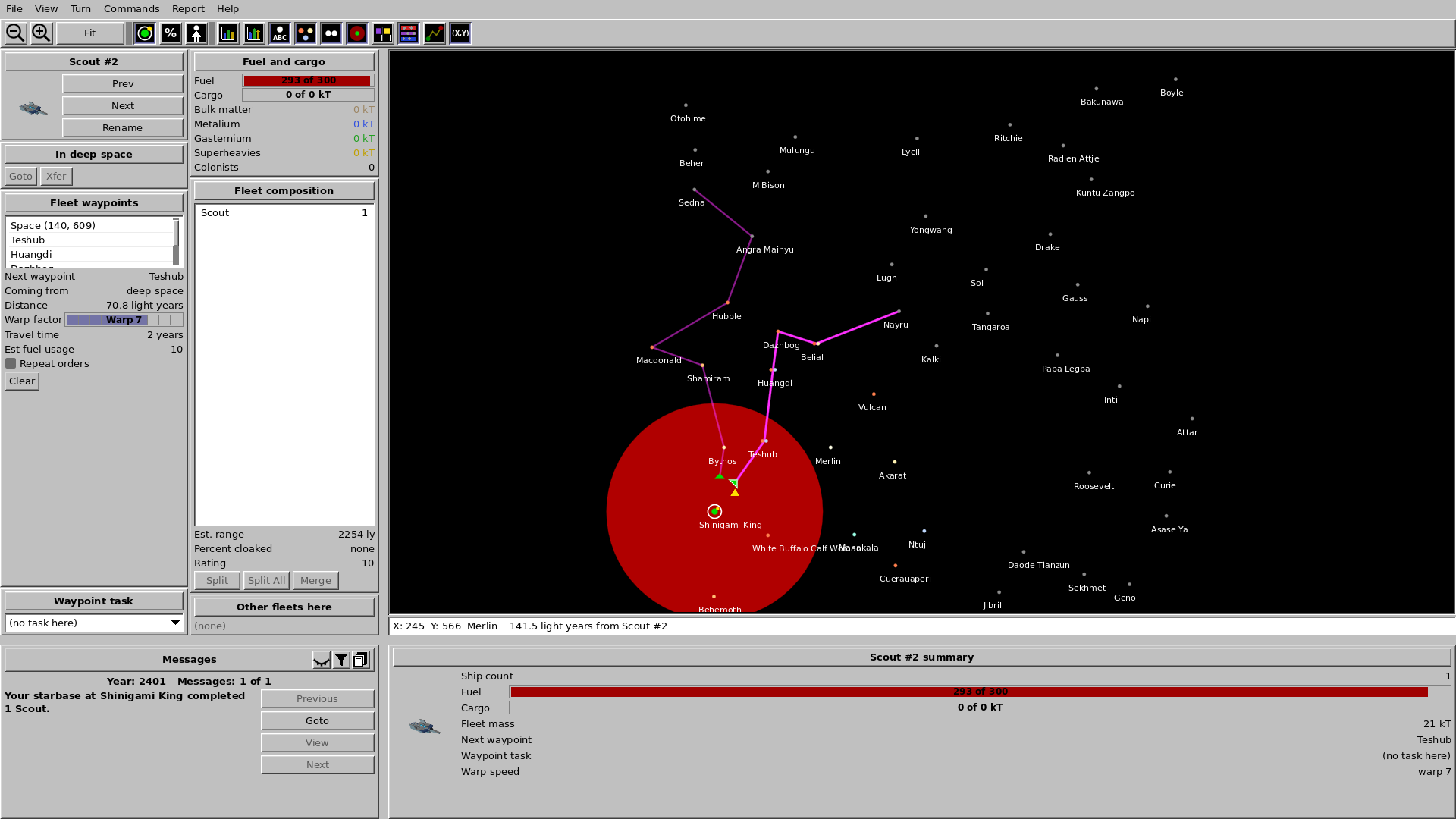
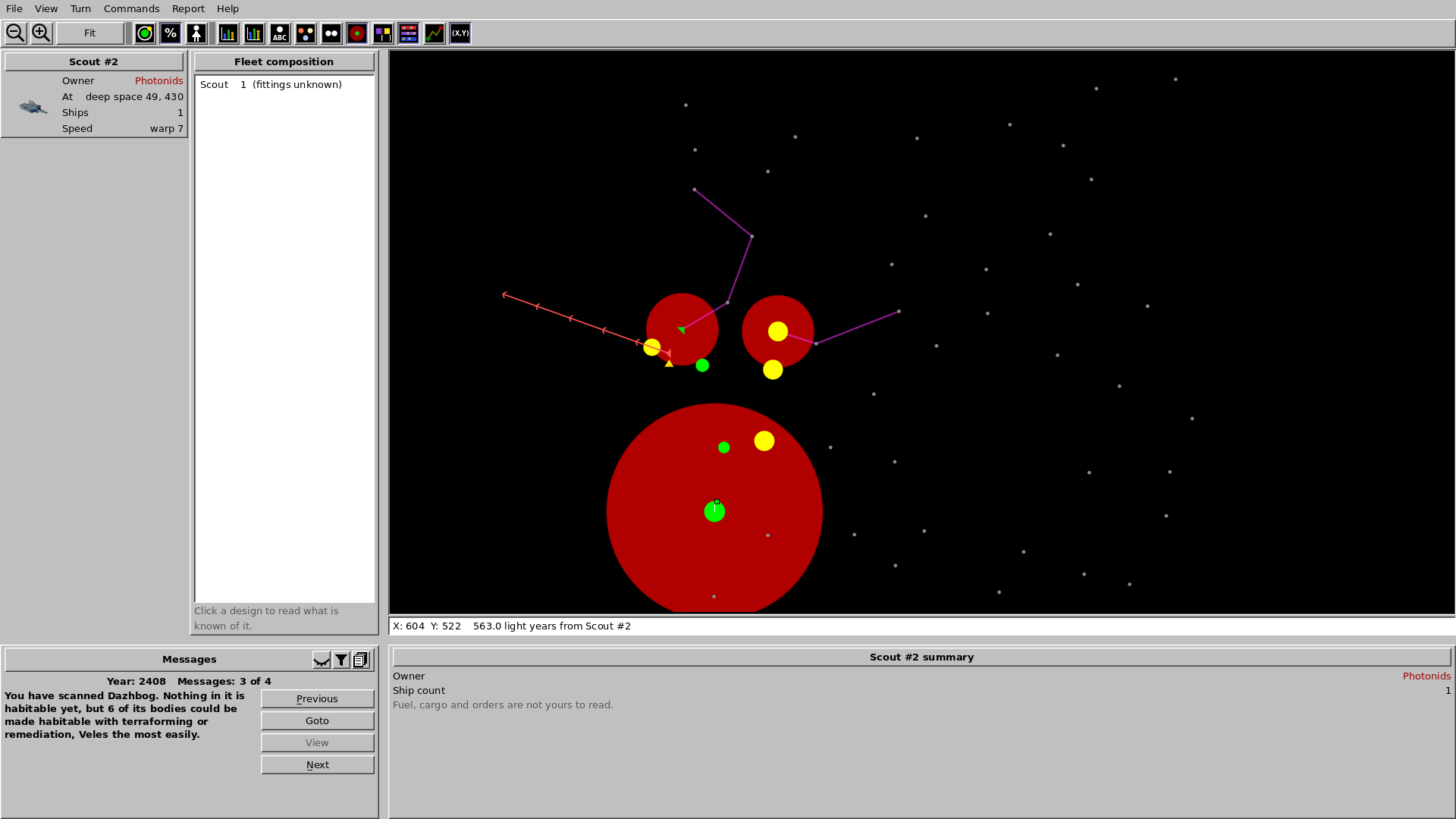
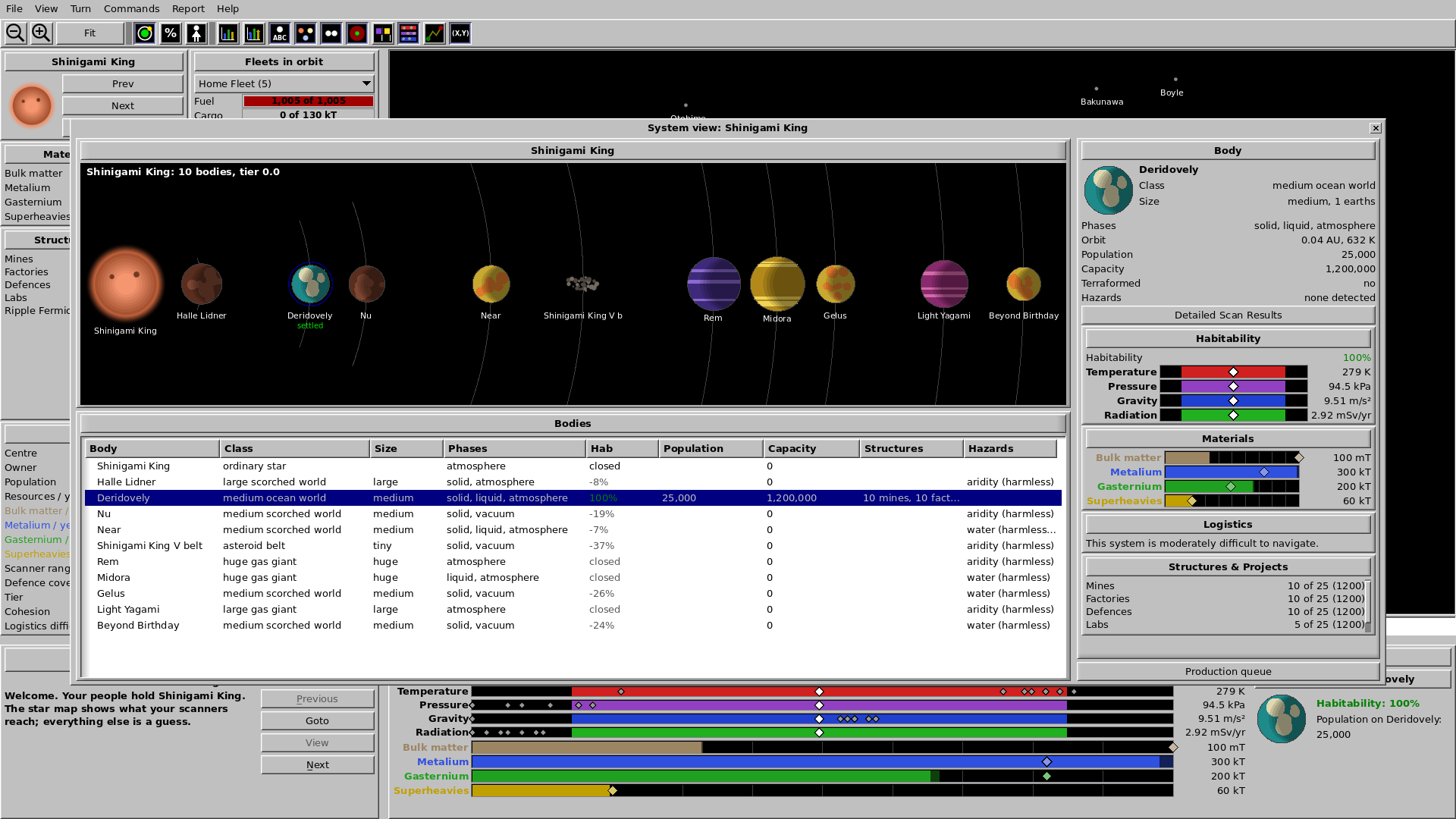
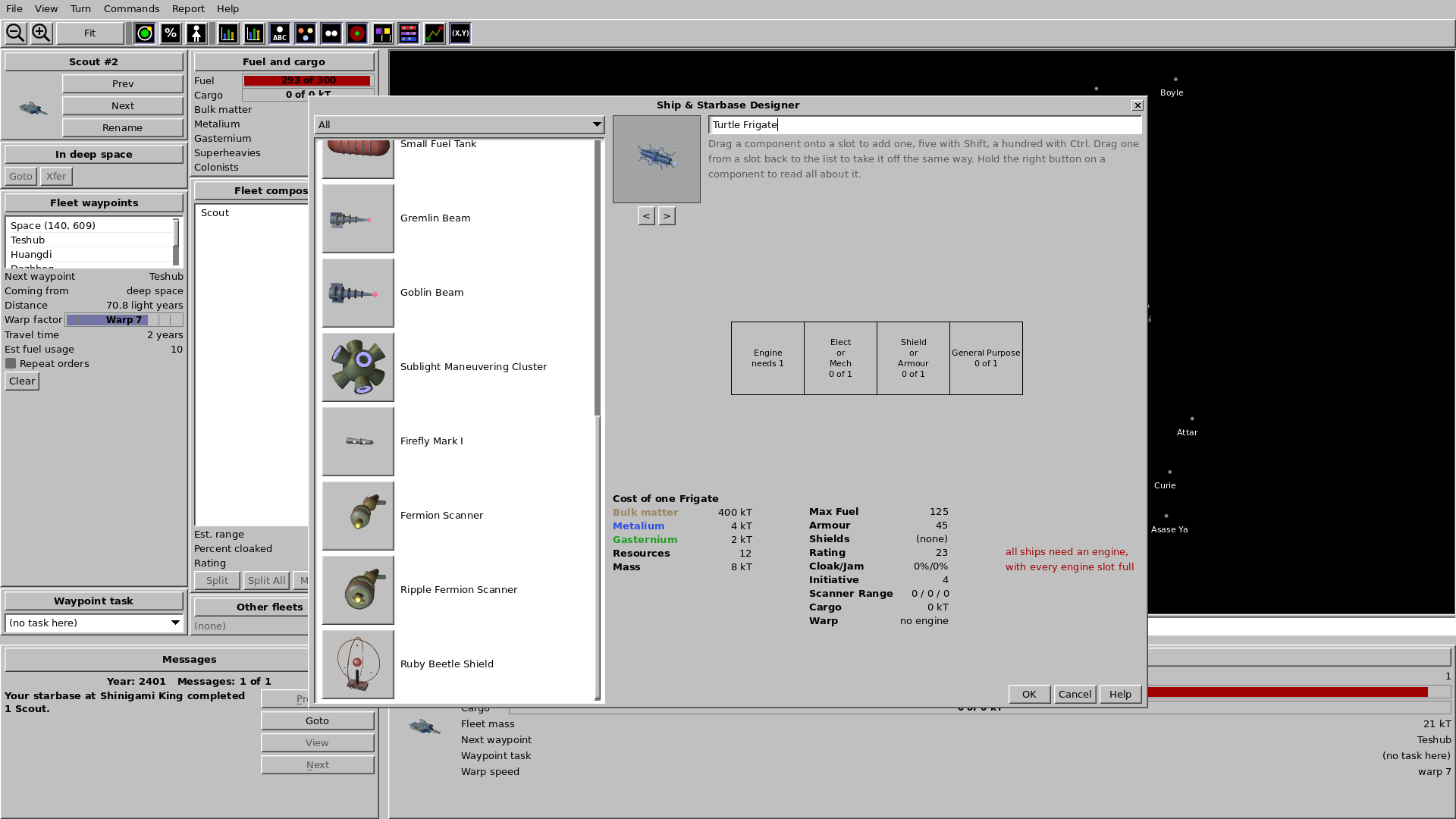
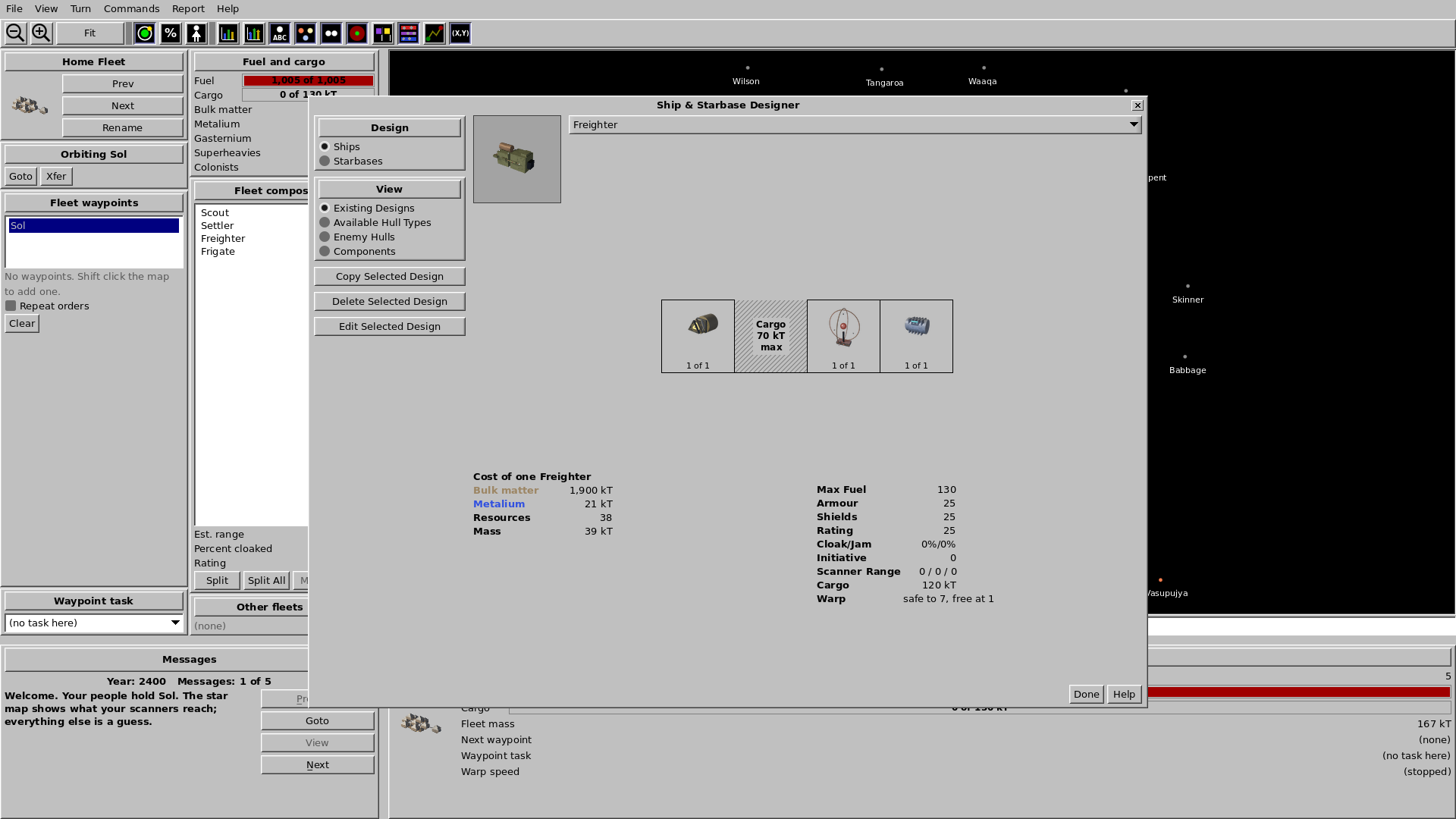
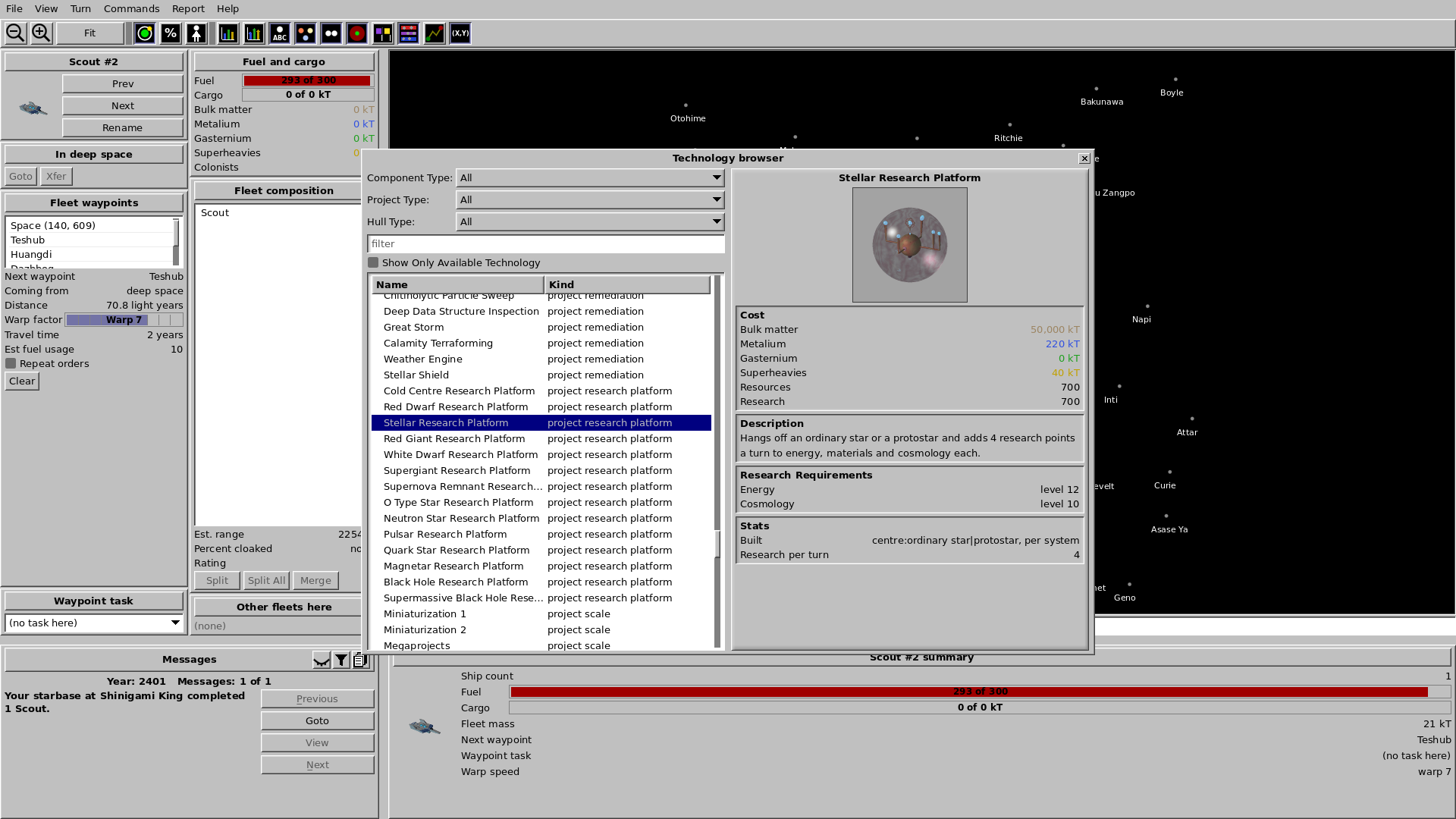
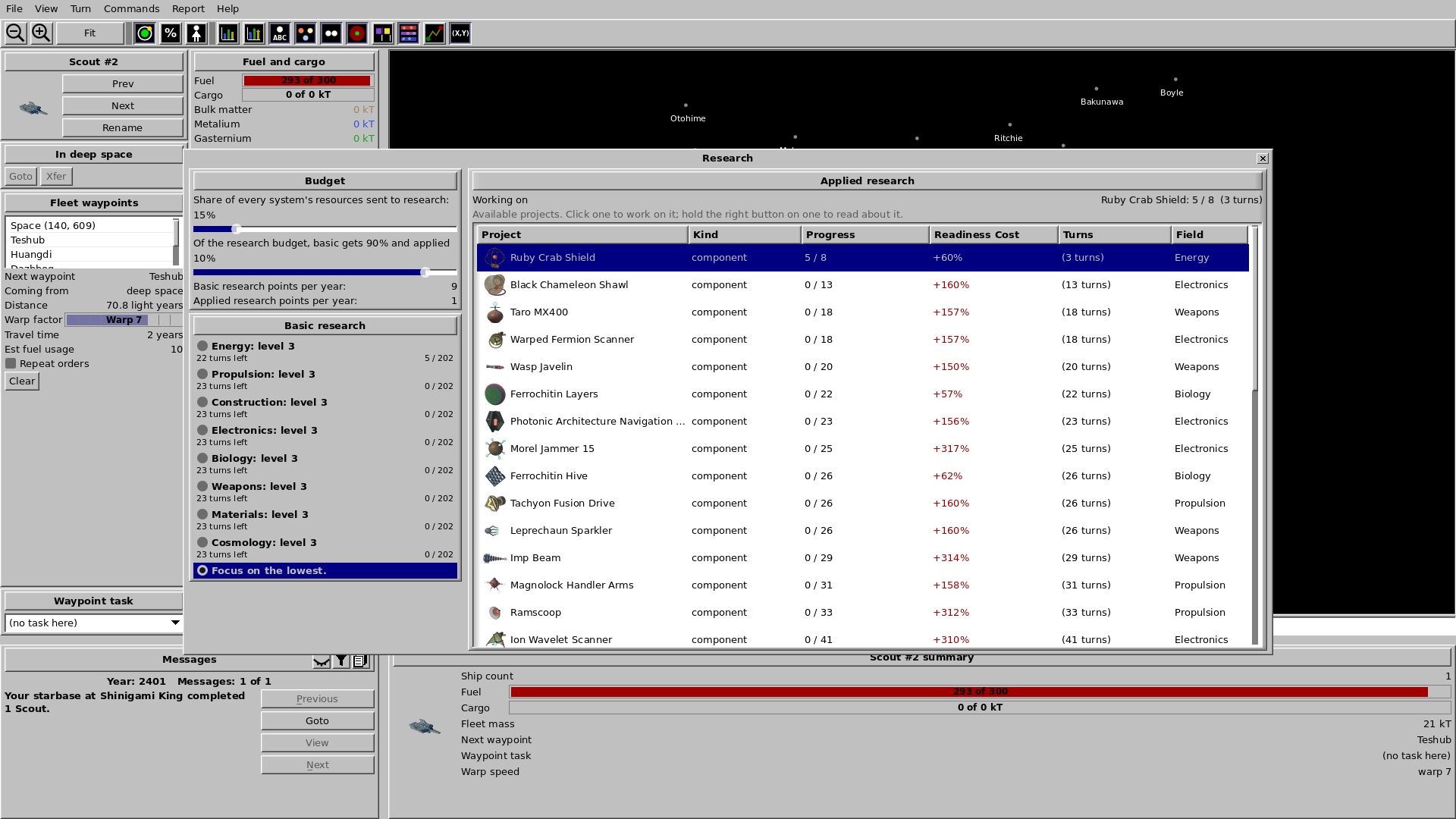
In Stars! one star was always exactly one planet. In Asteria it's a whole solar system where all planets have values for mass, temperature, gravity, pressure, radiation, etc which drive the ways your empire uses them. It's all randomly generated within reasonable physical parameters. Or you can choose to have an "Earth-like" system:
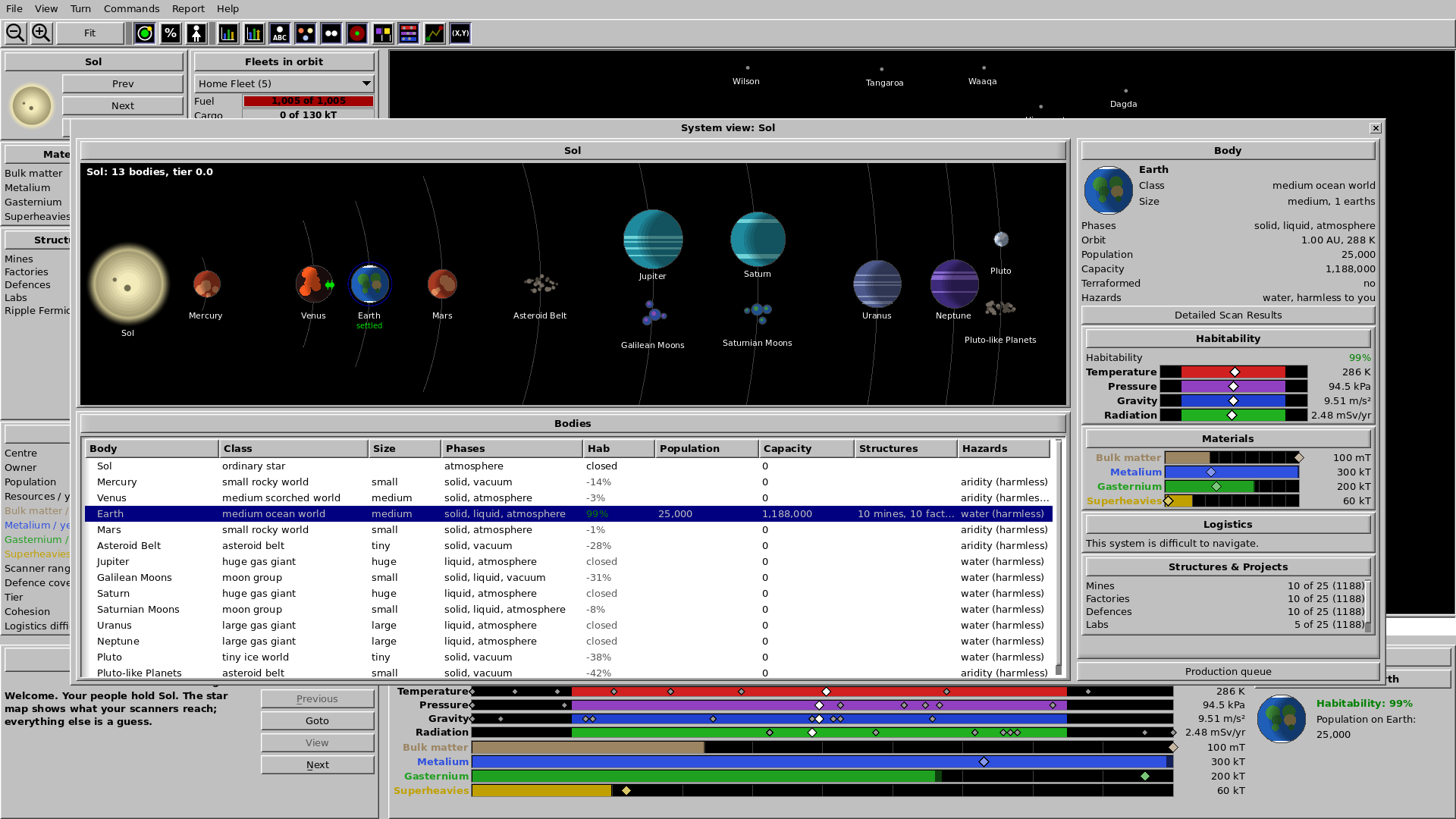
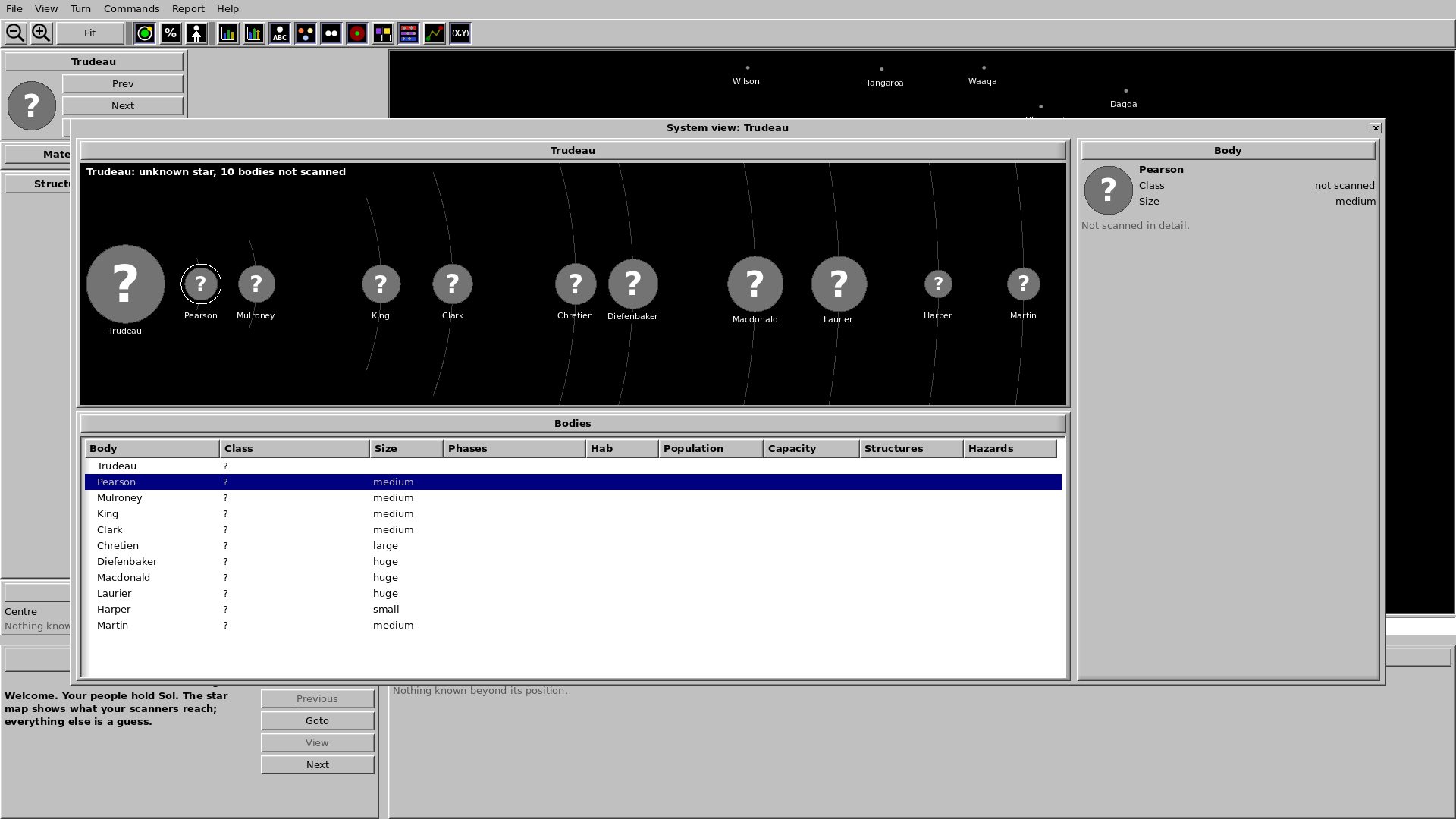
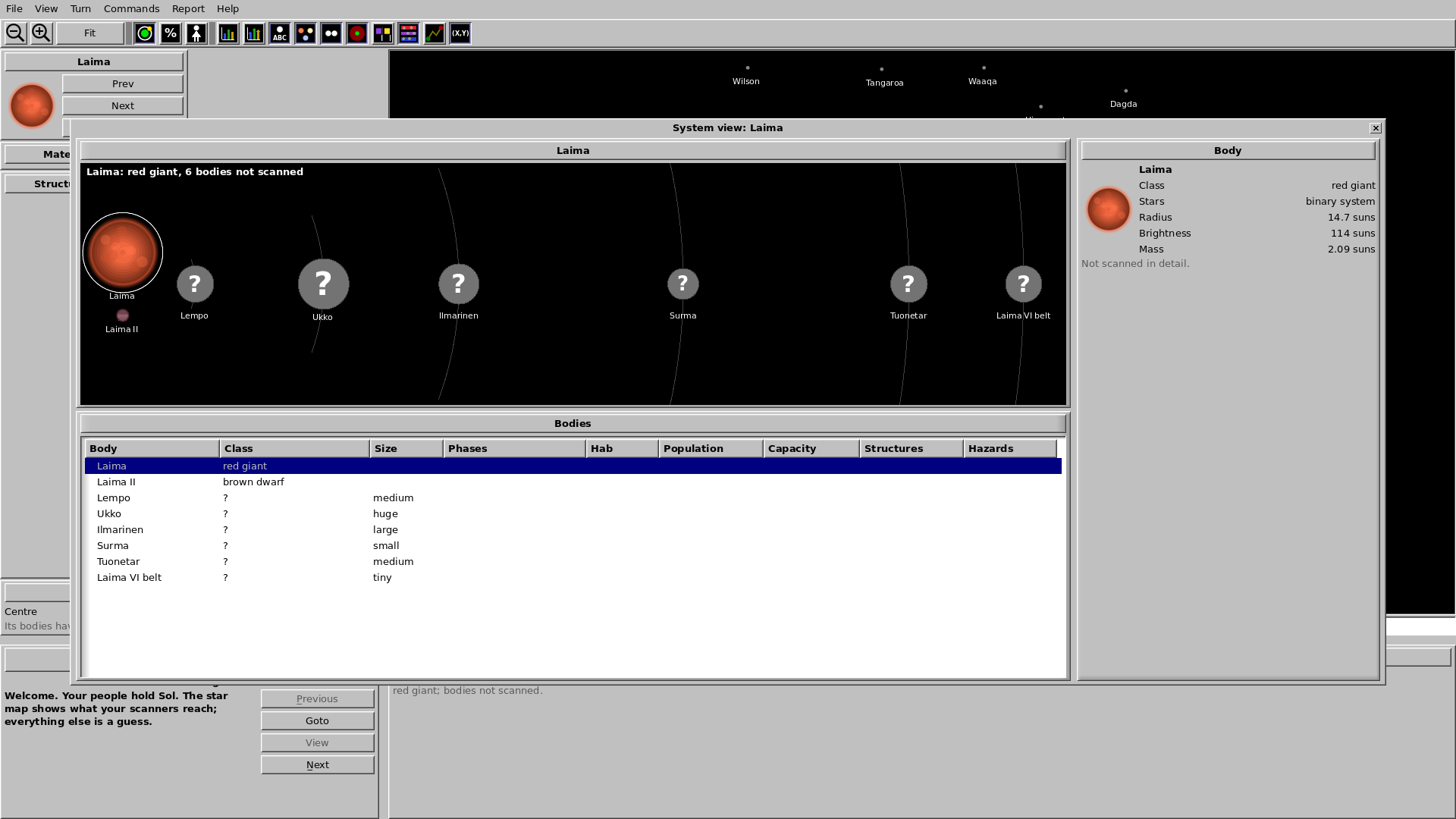
The first time a computer opponent starting bombing my Earth I felt a pang of dread.
Like Stars! there's a race editor, except I've added a lot of scifi concepts:
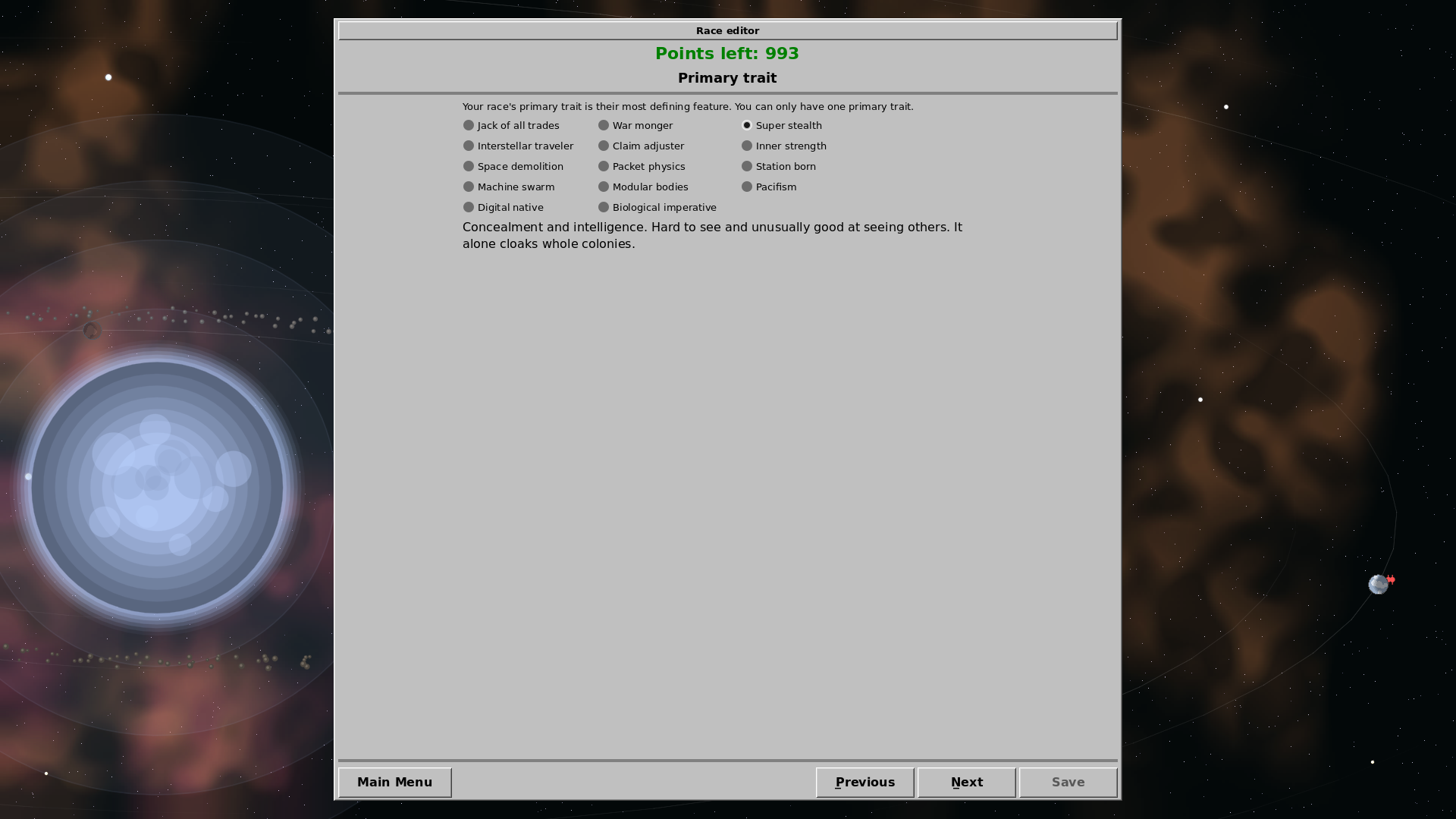
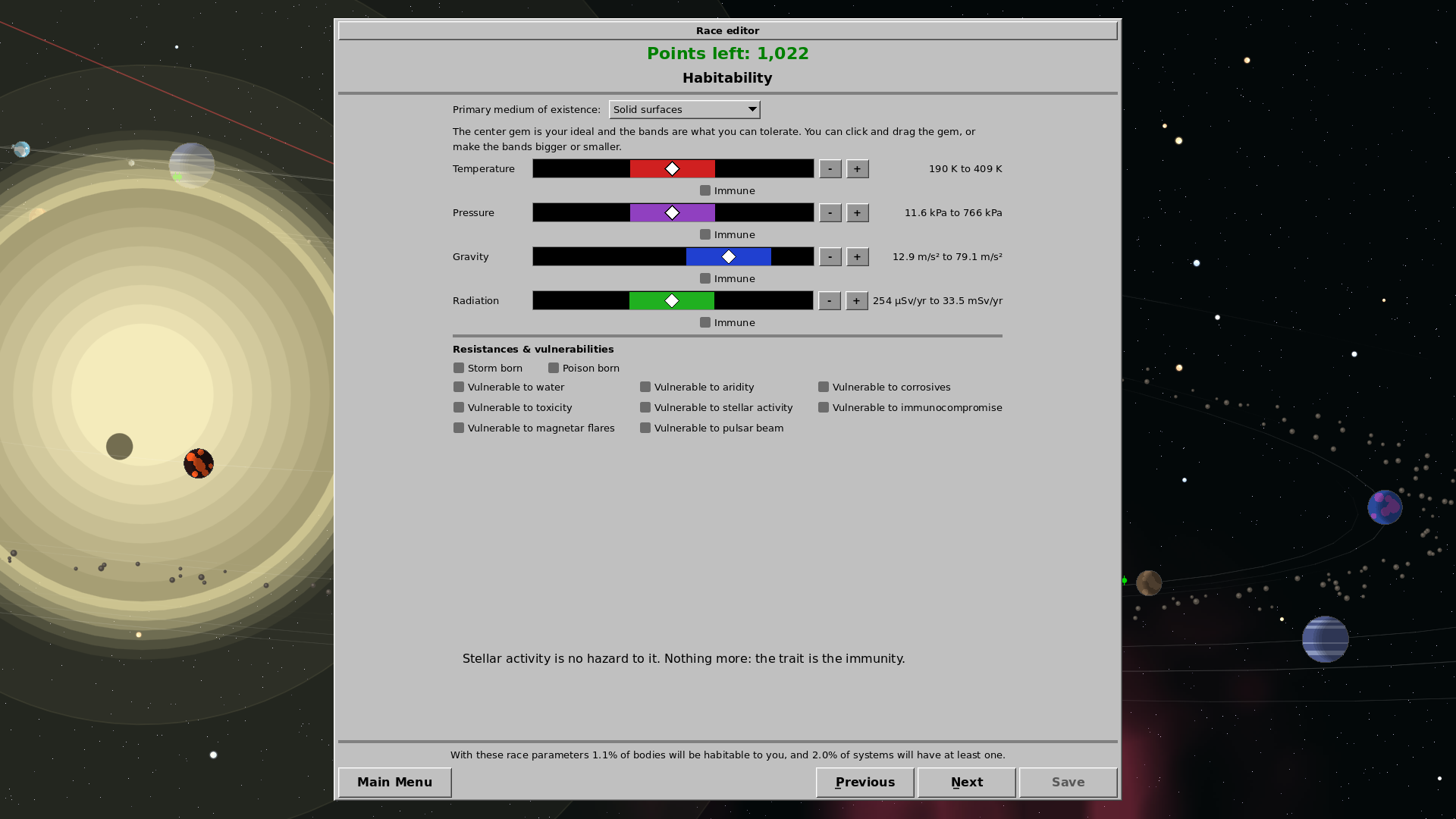
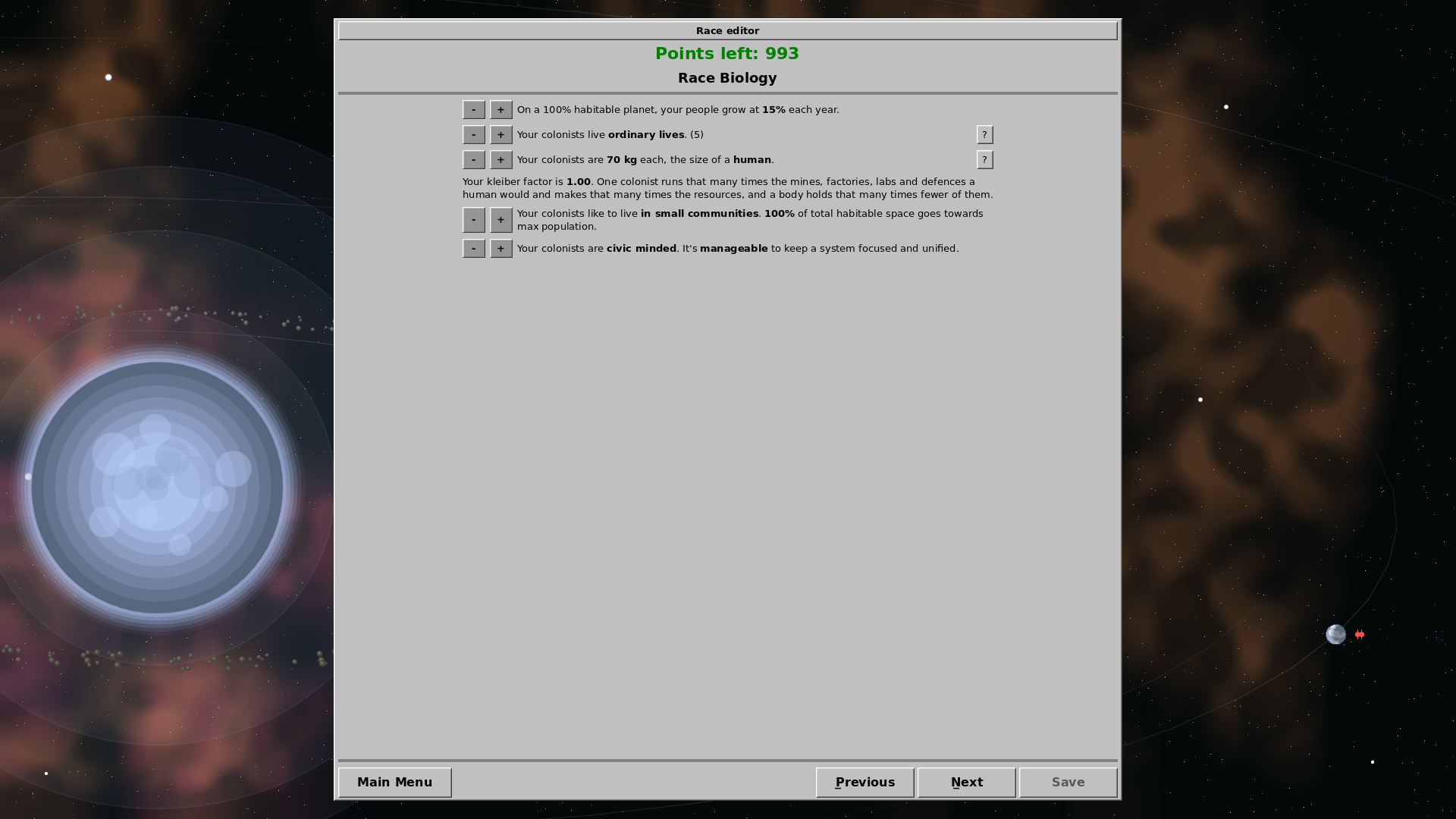
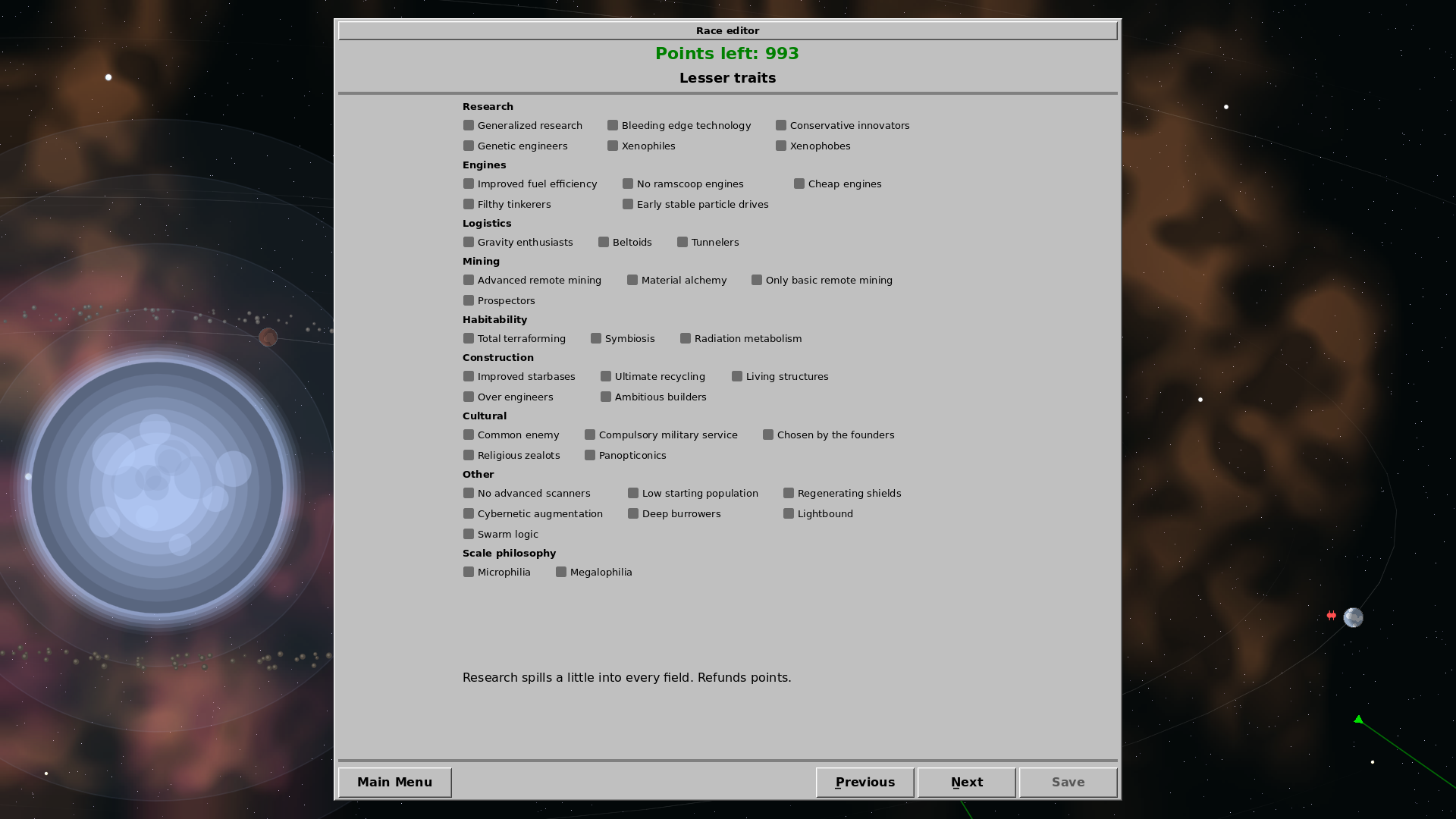
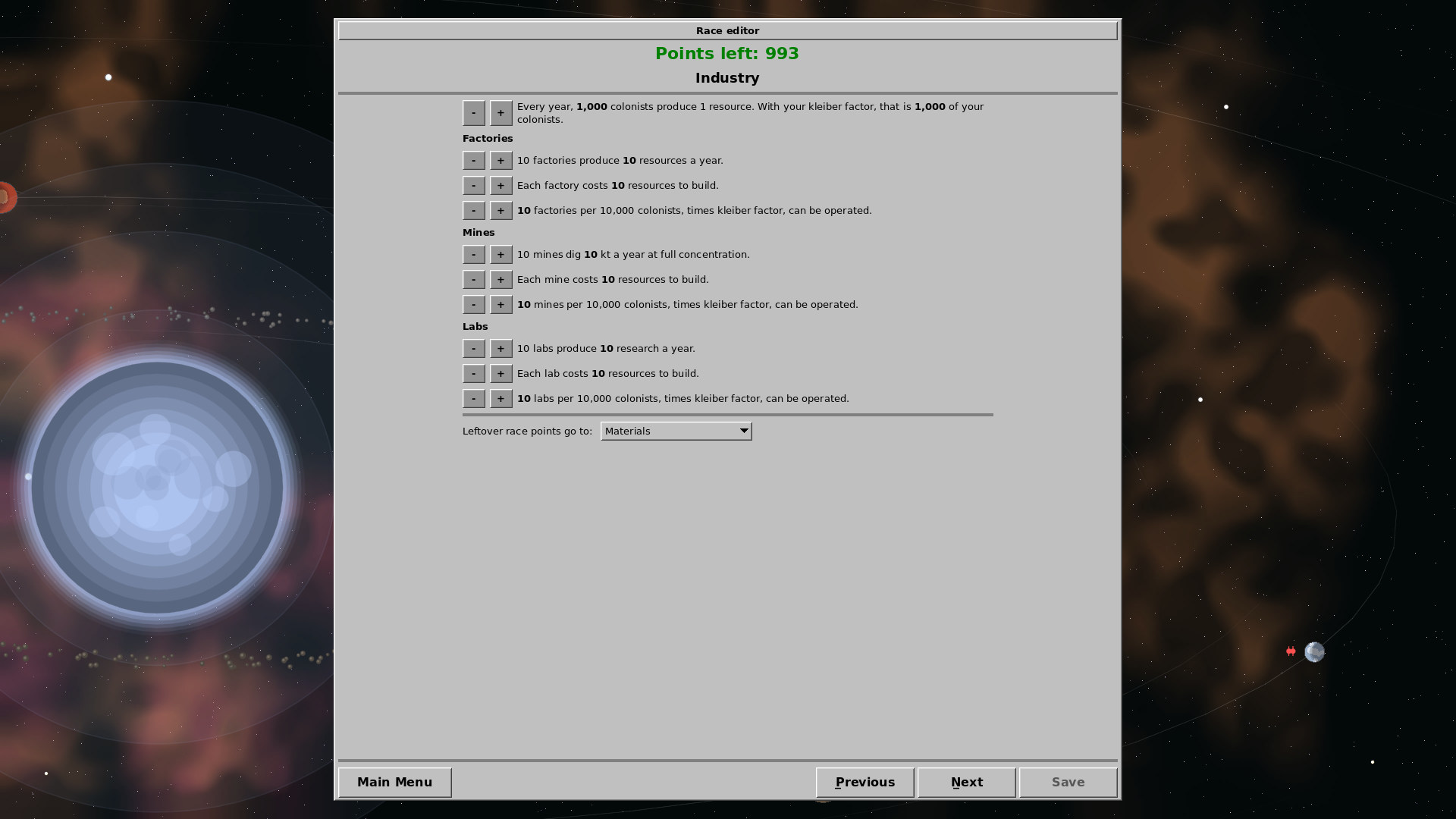
Yep, that's an intentional Windows 95 aesthetic. There's other visual themes if you prefer.
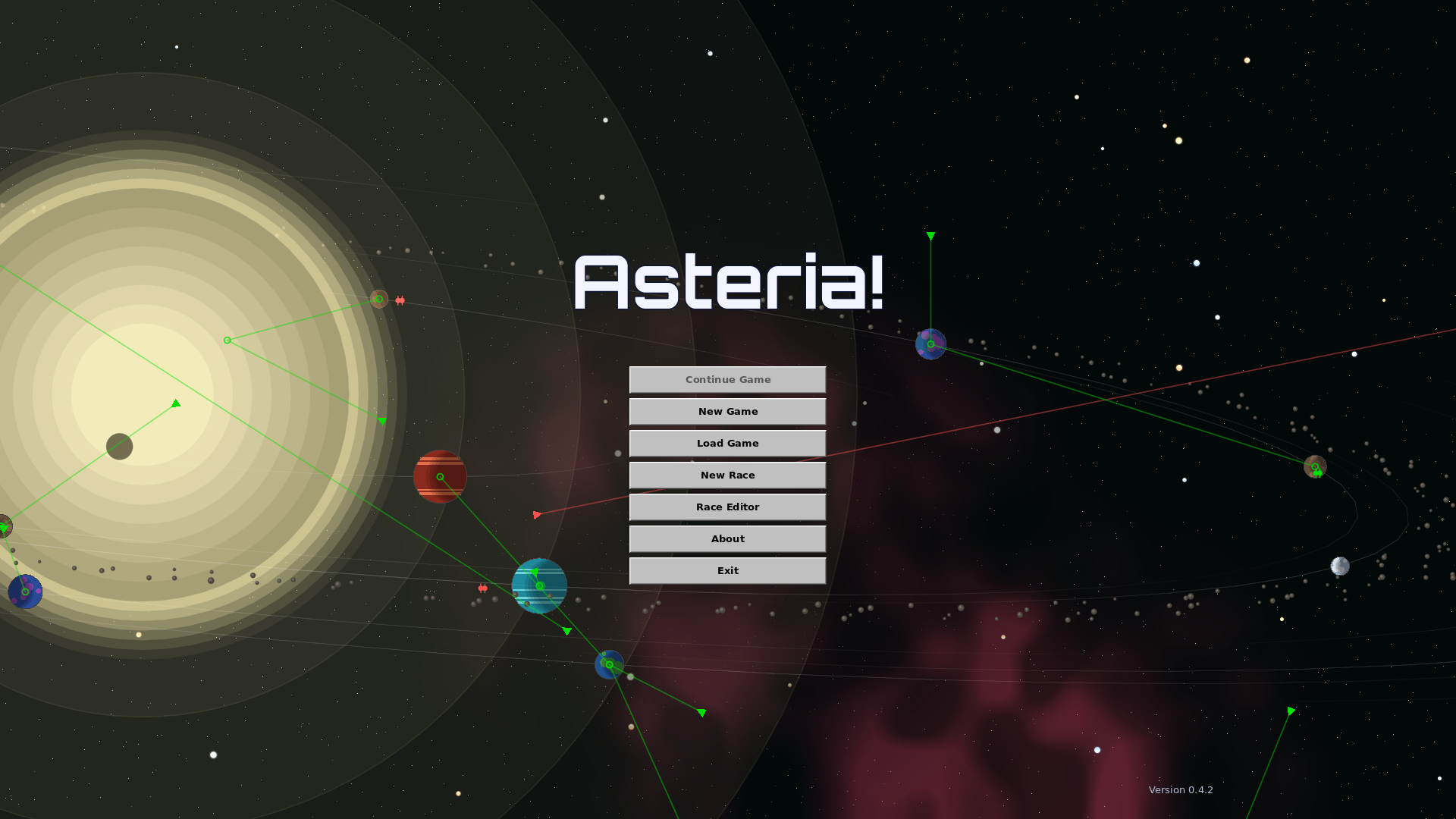
The main menu background is a fun animated star system with randomly generated stars, planets, moons, and ships:
Design Principles
- Stay close to the look and feel of Stars!.
- Content is informed by science, our universe, and realism.
- Fun over realism.
Roadmap
- Finish the to-do list (at a shockingly fast pace thanks to AI). For example presently you can build mine layers but they can't actually do anything yet.
- Run simulations of computers playing against computers on thousands of race and universe configurations to help balance the game.
- Early Access release on Steam. Not so hard since I pay the developer fee already for ChessCraft. Send me an email if you'd like to be notified of this!
Development
Remarkably I haven't written a single line of code for this entire game - despite being a fairly accomplished and competent full stack developer. It's all Claude. Fable at first to lay a strong foundation then smaller models like Opus to bugfix and tweak. So far this has been about 150 hours of design, art generation, art assessment, and playtesting.
Value
Can I really release on Steam (and maybe make money) if AI wrote all the code? Is there any value to a software project today if AI writes the software?
Yes, there is value here. Asteria isn't just code. Human time and effort still went into it.
- Taste: I spent time assessing and iterating on the design, style, art, and feel of this game.
- Playtesting: Unlike AI generated vaporware, you get a guarantee from me that at least one person enjoyed many hours of playtime and explored and fixed the edge cases.
- Product vision and control: If you ask an AI to implement a feature they'll just do it. Somehow. Human time was spent reining in the chaos and consolidating features into fun and simple gameplay systems.
- Human Writing: All text, tech names, descriptions, events, messages, and dilemmas are (or will be) written by me. Some are currently AI generated placeholders, or copied from Stars!, and a big fun rewrite is in progress.
Developer Tools
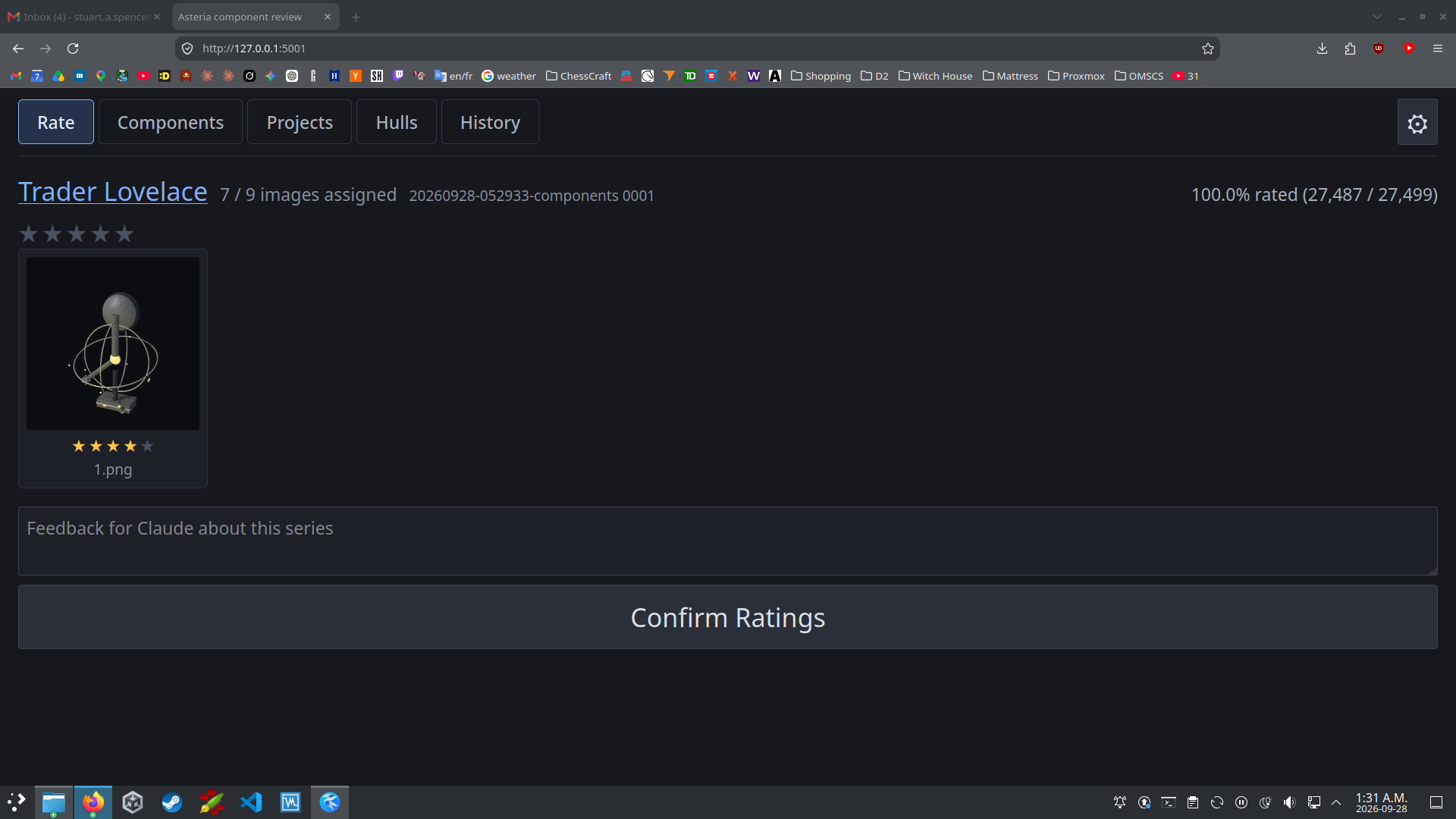
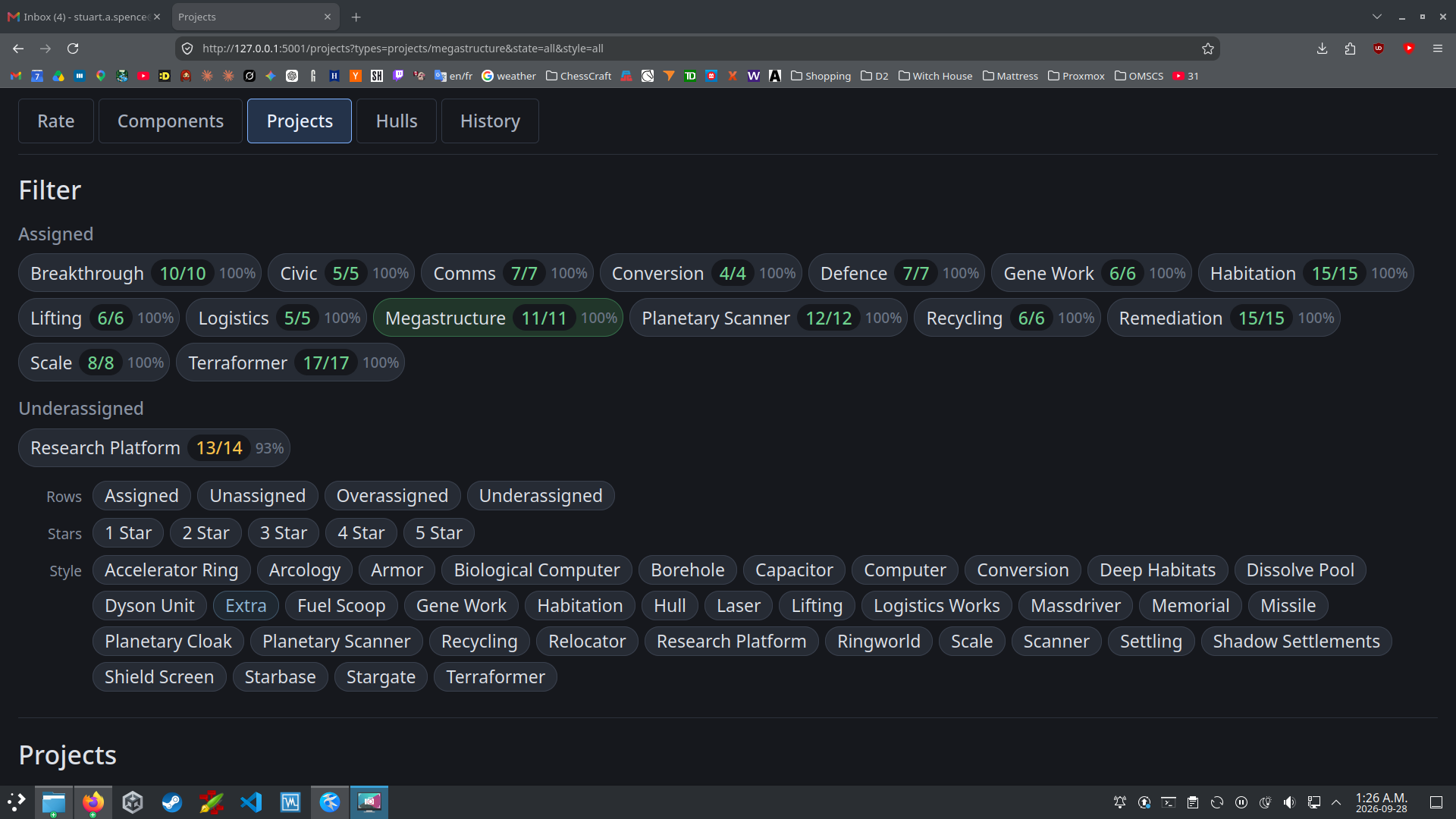
Thanks to AI tools like Claude, the quality of my internal development tools used to help build this game is jaw-dropping. Here's a web app I used to help rate, organize, and assign thousands of AI generated tech images to the hundreds of available game slots (ship images, shield images, etc):
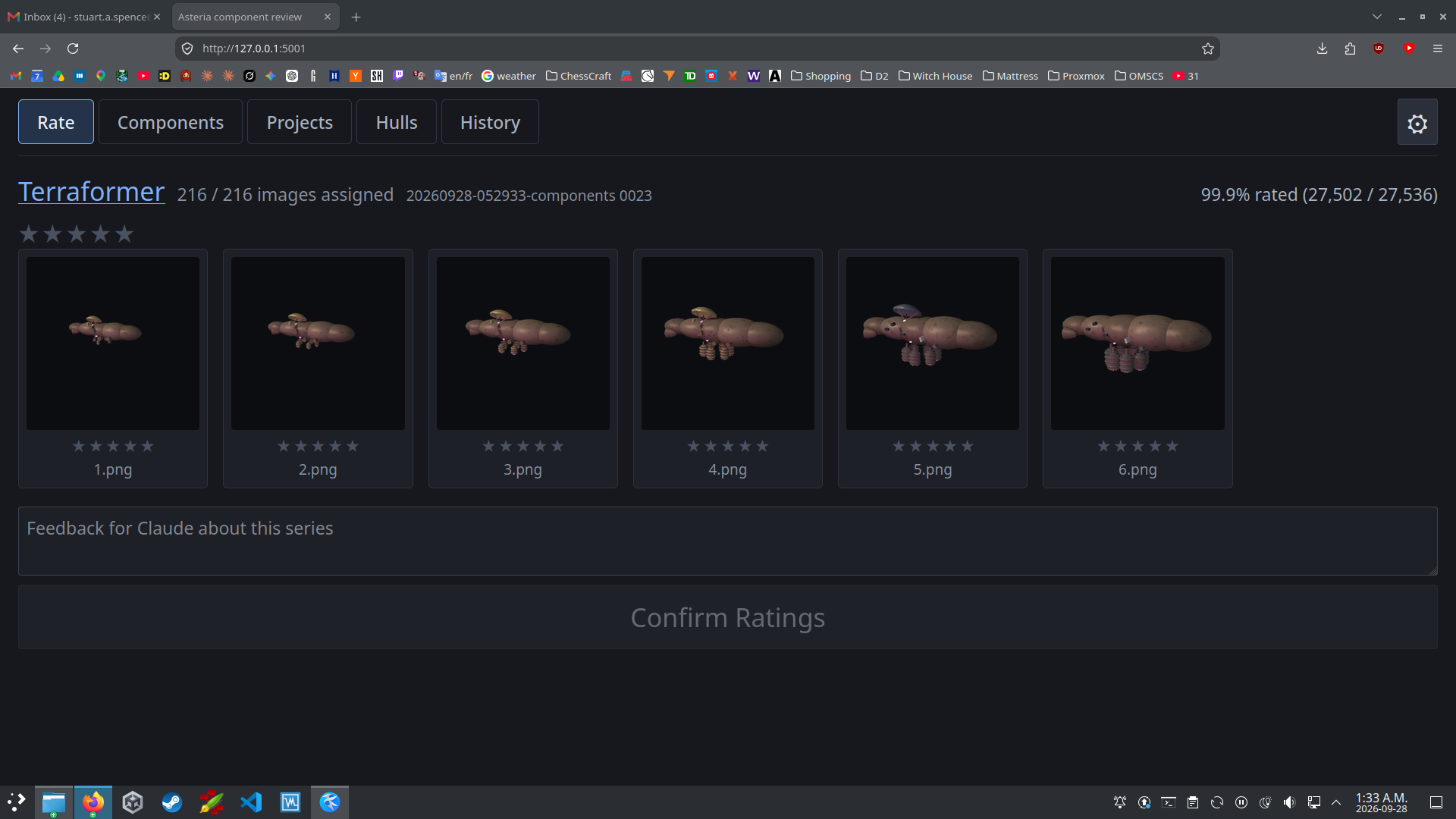
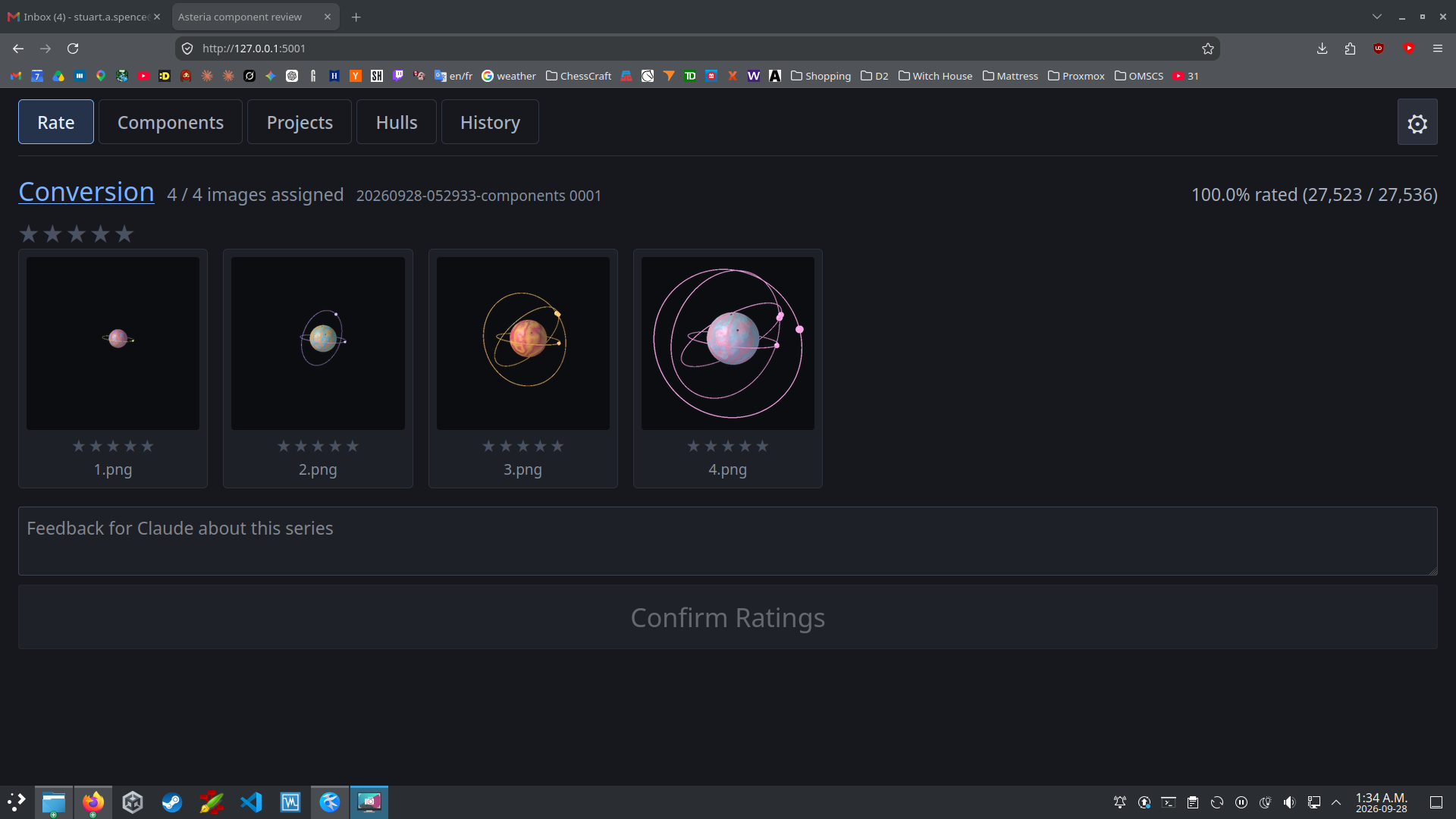
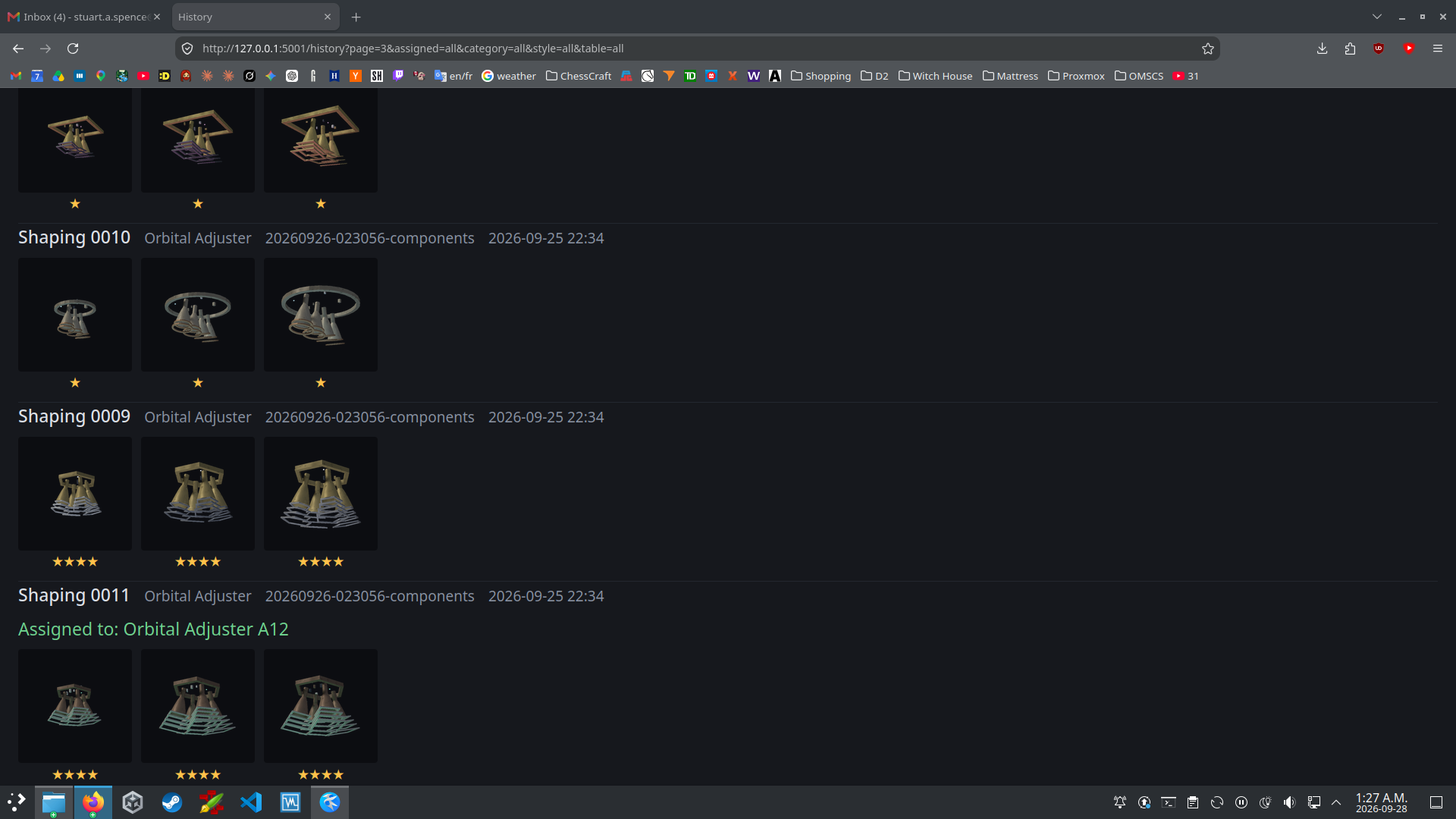
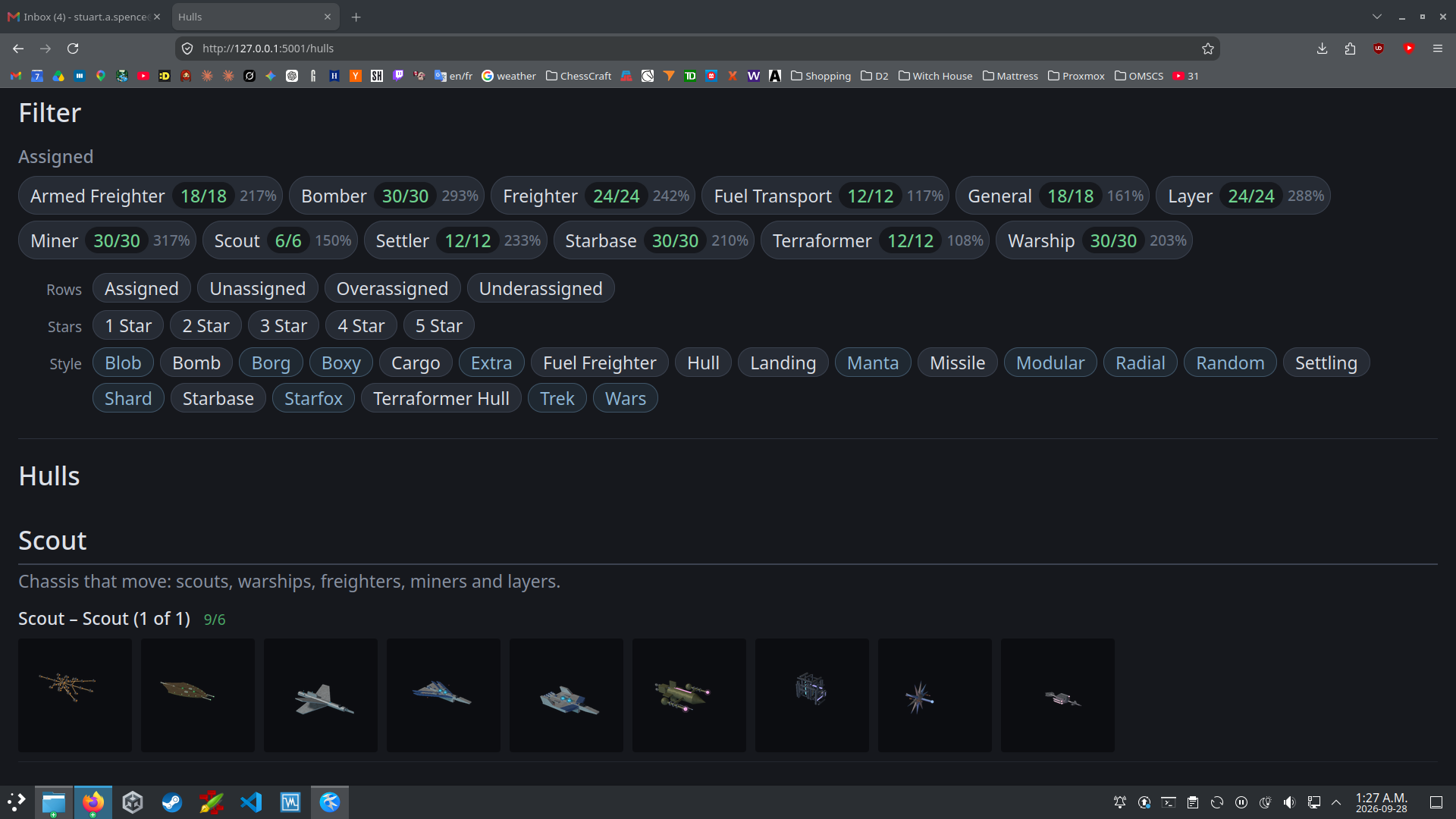
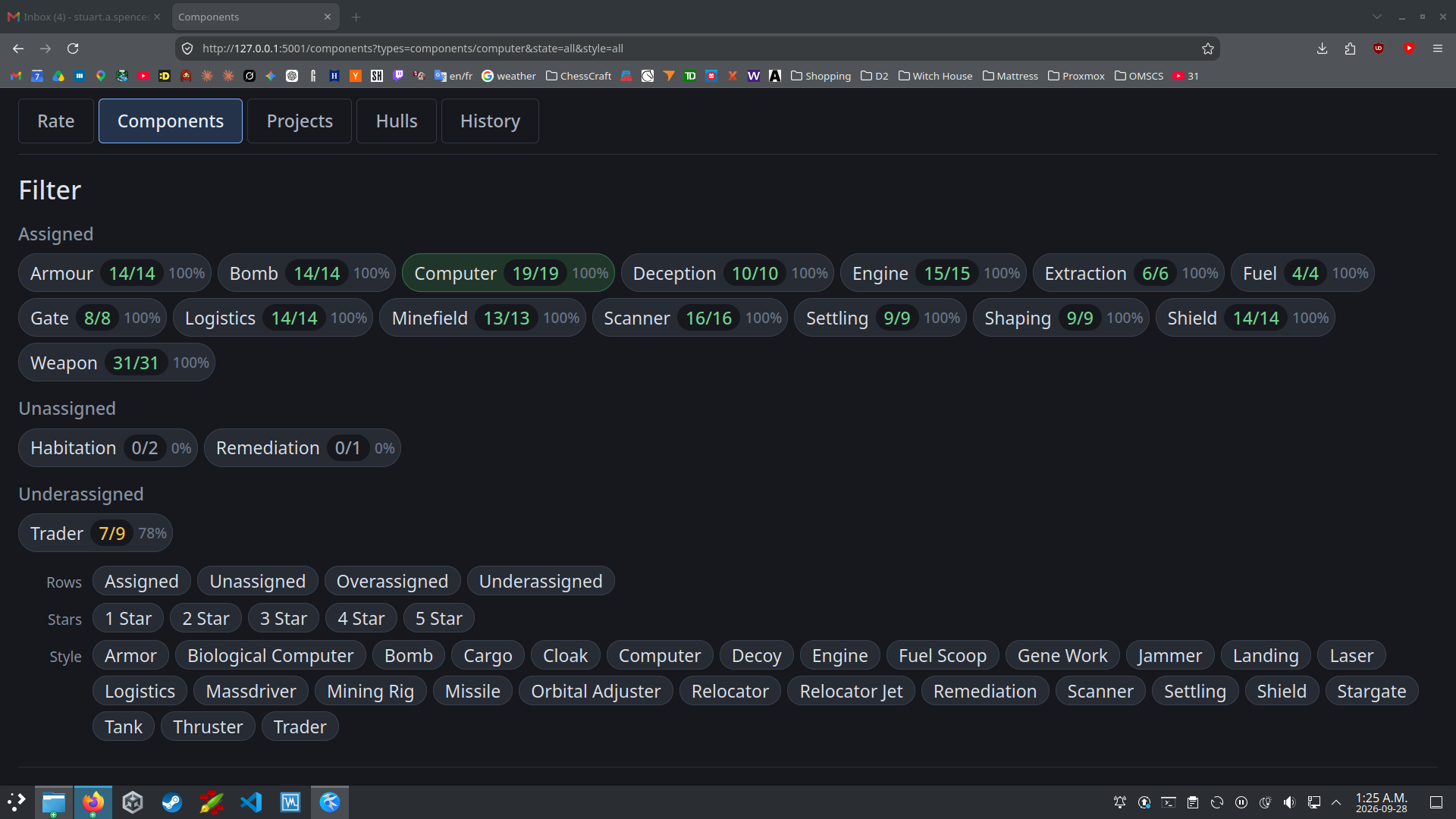
Here's a later iteration to edit the ship layouts, reroll image generation runs, assign or delete newly generated images to specific tech, browse all tech, or browse all races:
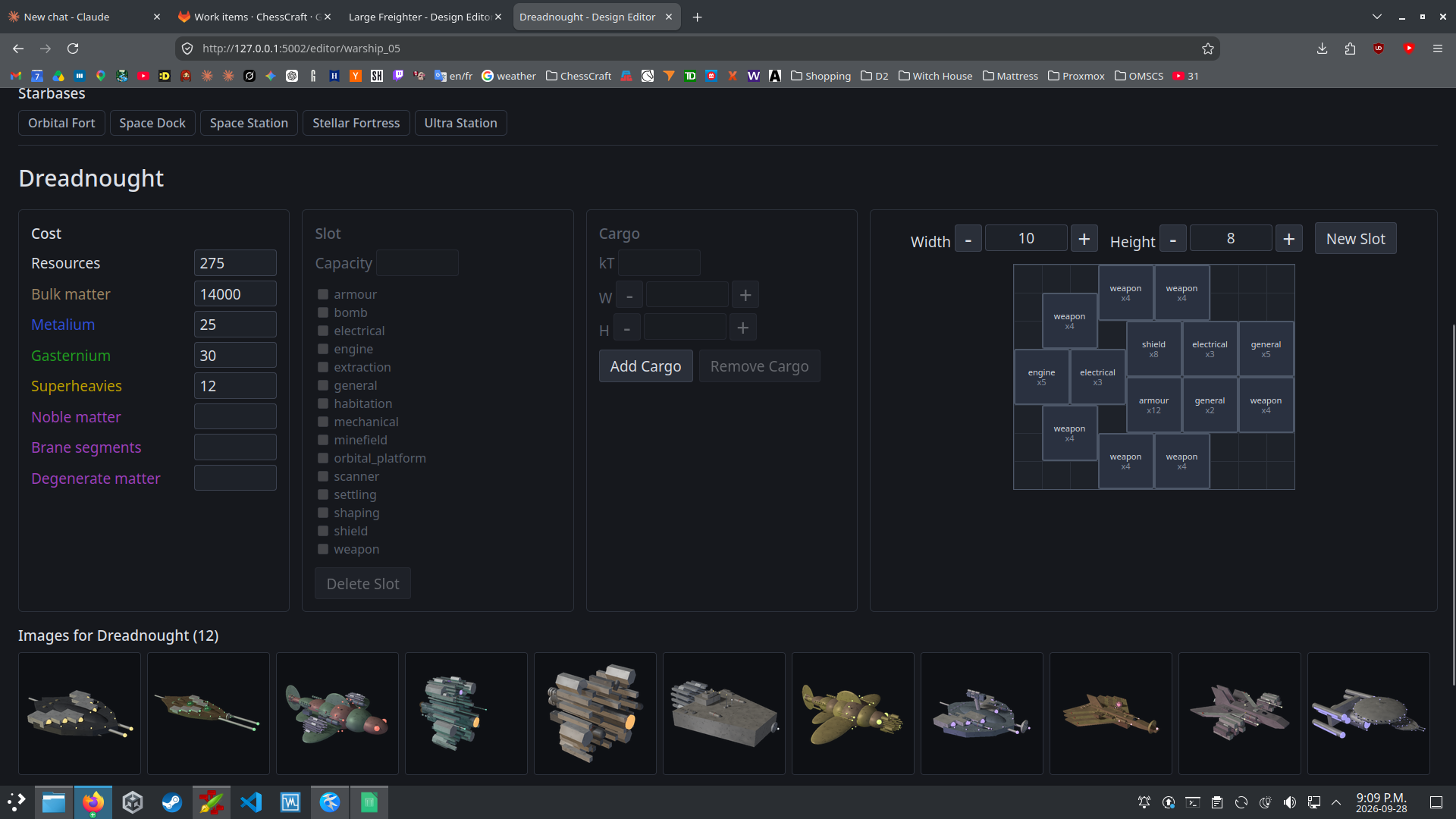
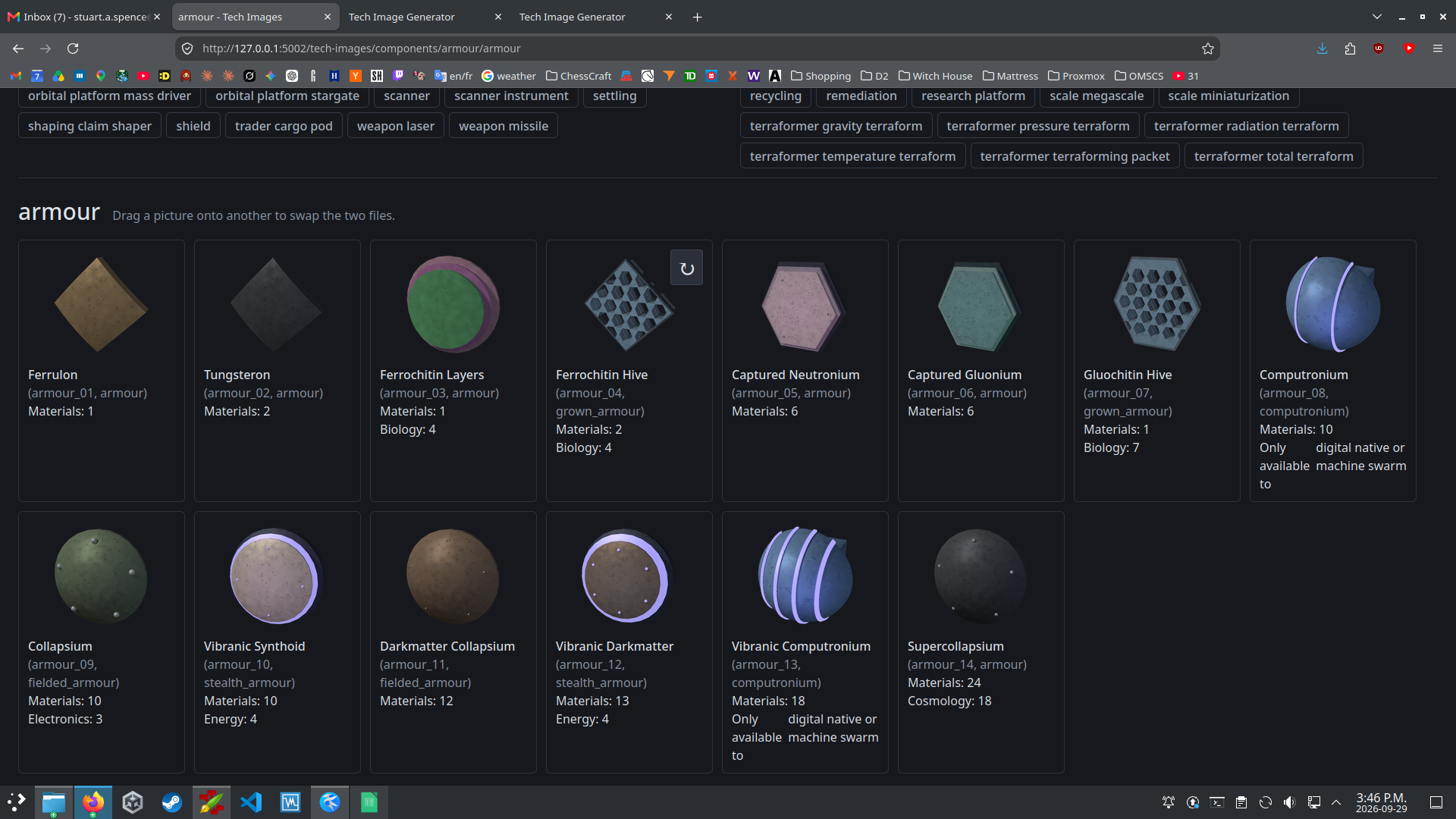
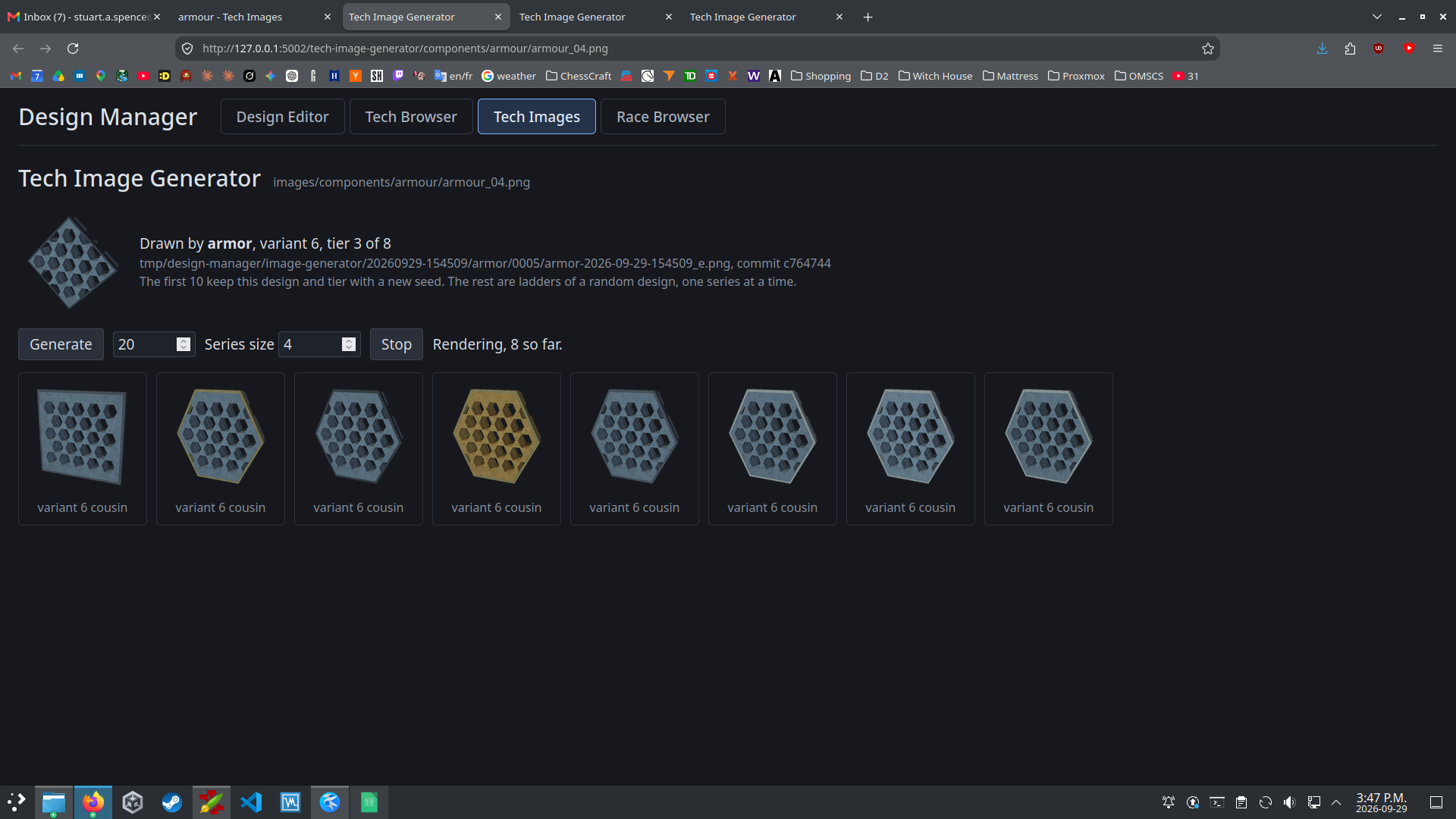
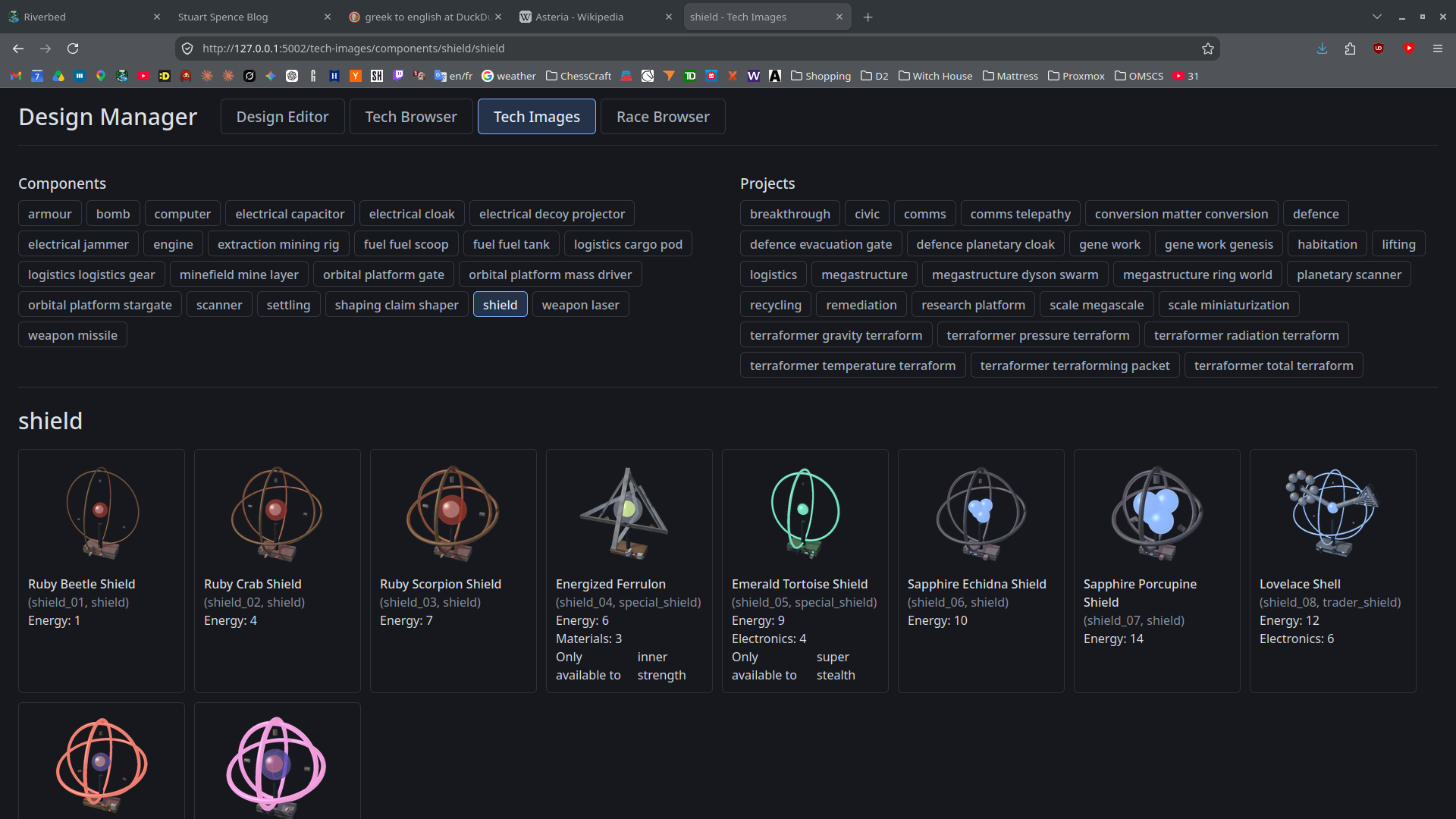
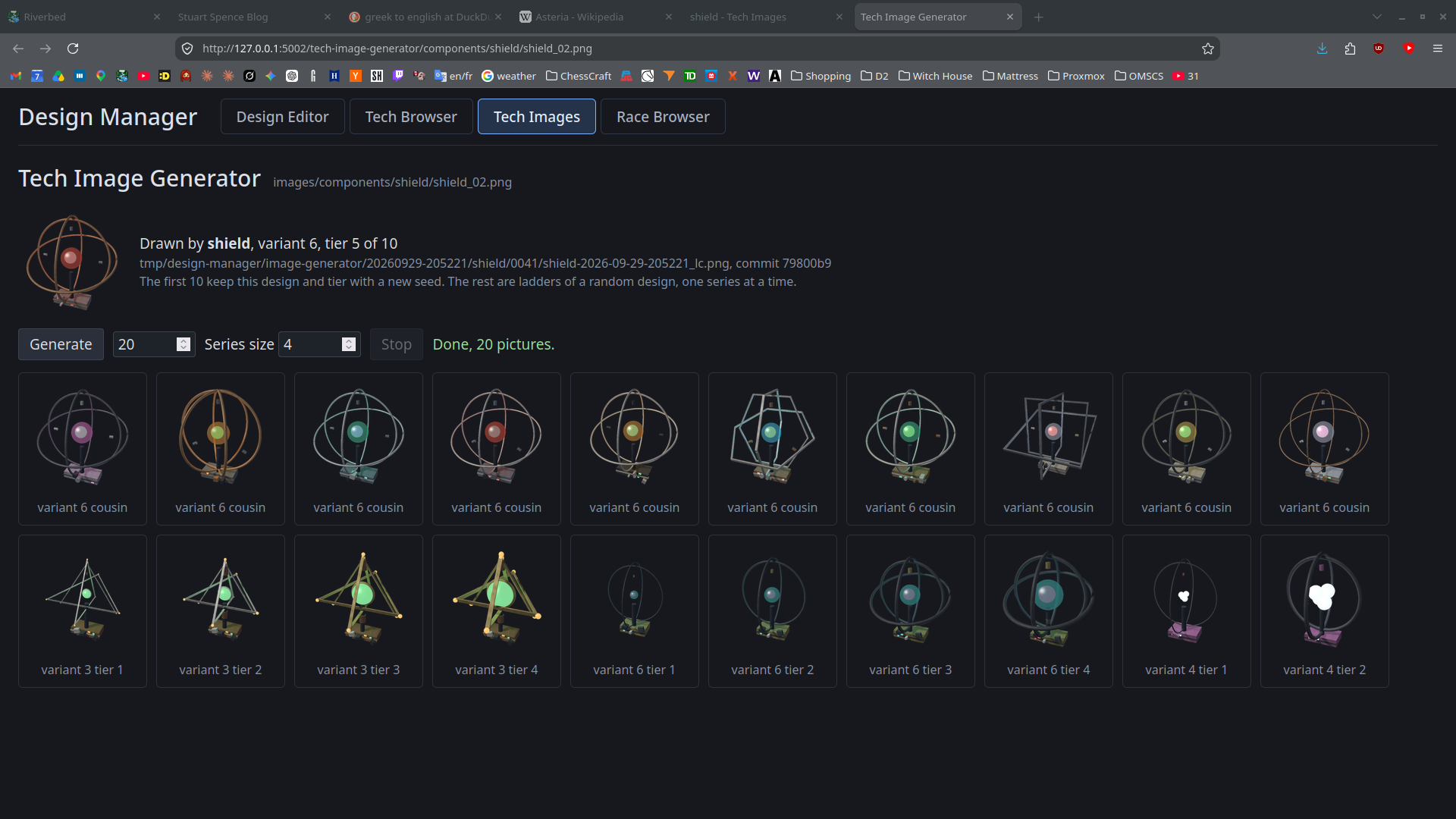
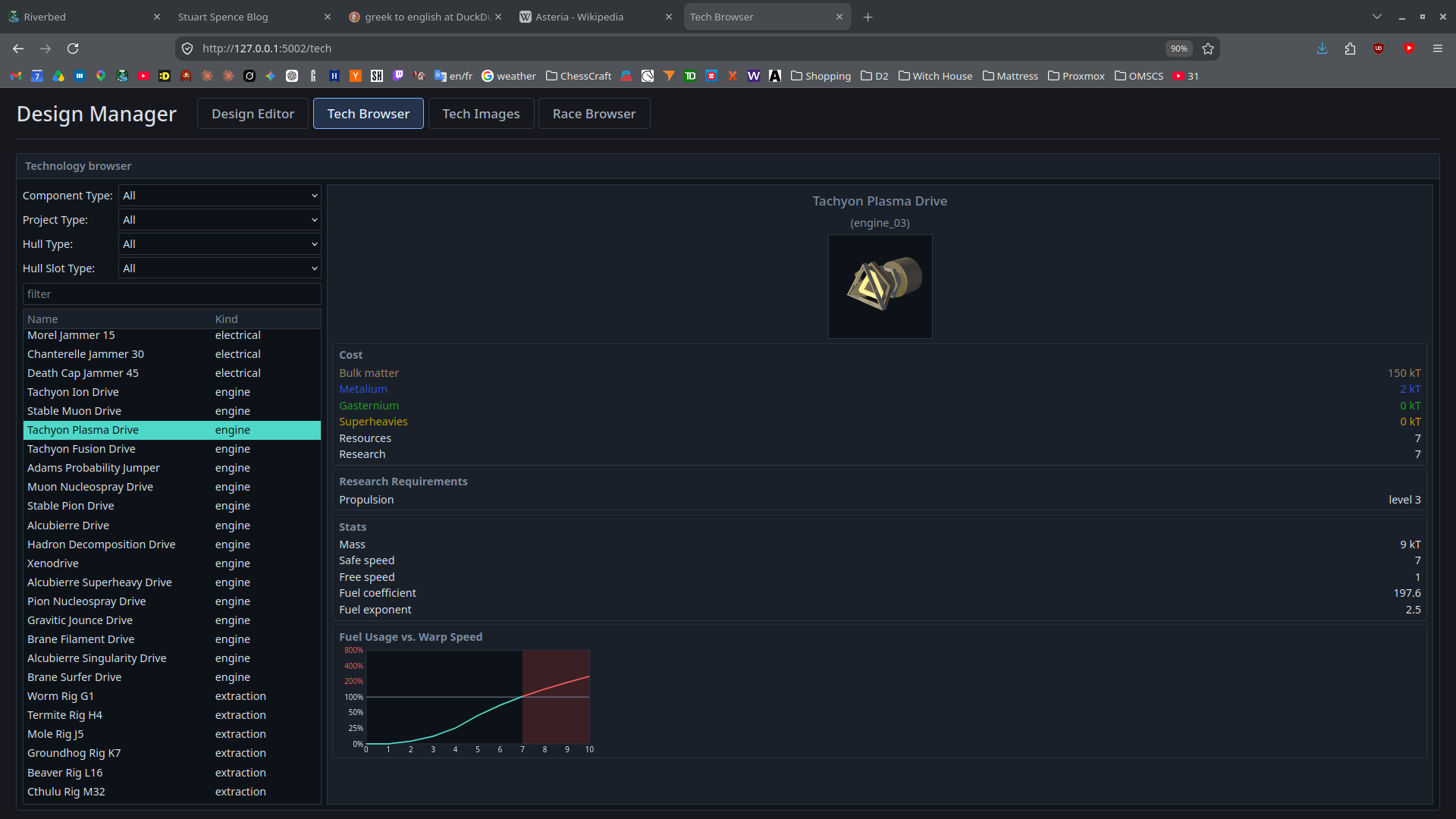
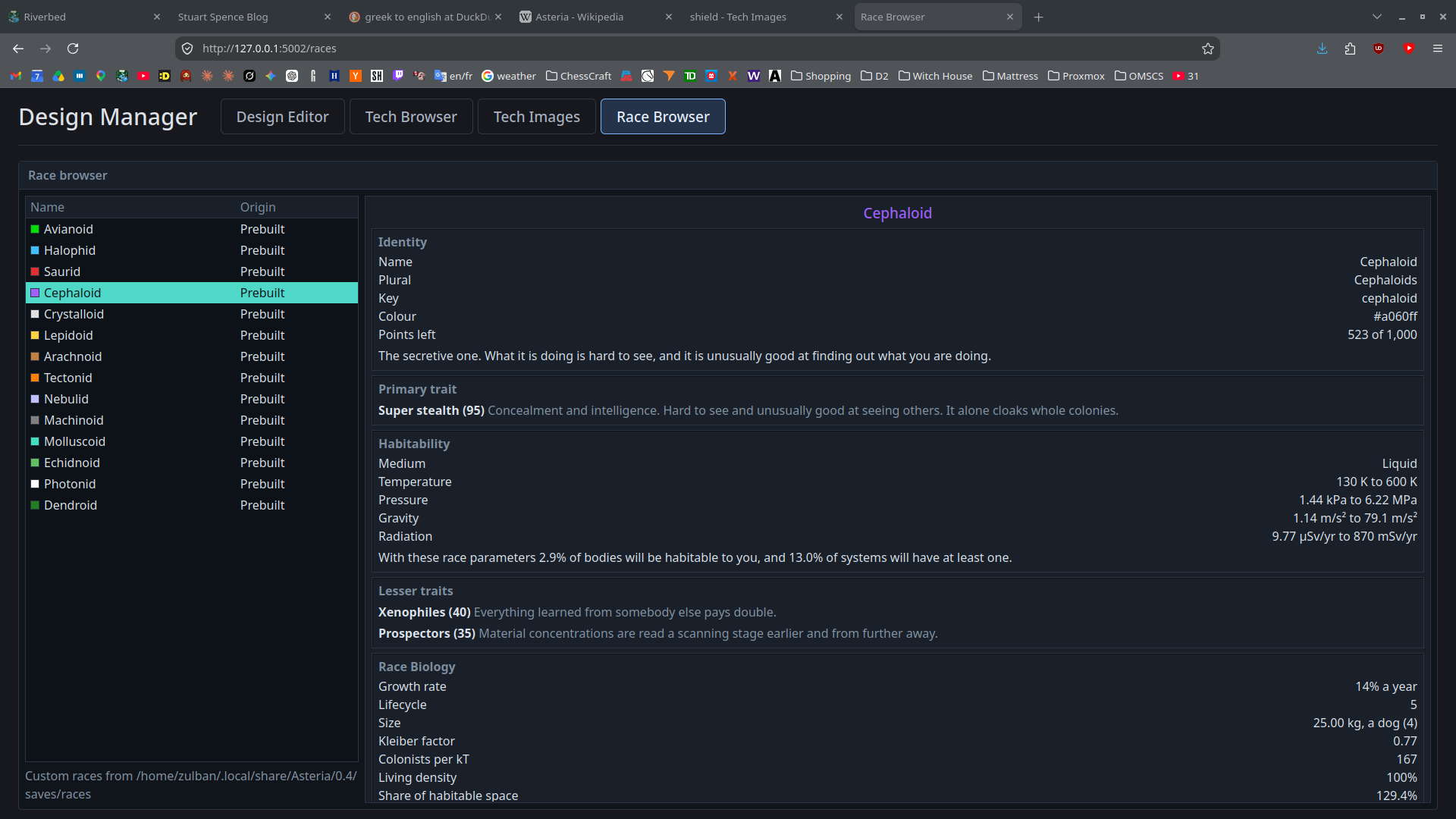
Before tools like Claude, I would never spend 40 hours building these web apps to transform 8 hours of drudge work into 5 hours of pleasant work. But now - all this functionality was basically implemented one-shot by Claude, after 30 seconds of writing from me, with occasional tweaks as I was using it. All 50 times that I asked for a tweak or feature Claude executed it perfectly as requested.
Interesting side note: Claude does not generate images. However it does generate code. So after many iterations and extensive feedback, I've got Claude to write a great pipeline for generating art assets randomly. I've learned a lot about how LLMs can and cannot introduce meaningful variations into randomly generated assets - and how to coerce them properly into writing code that adequately executes the randomness instead of the LLM. Maybe I'll write about that sometime.
More Details
Cloning Stars! wouldn't be worth it without my dream enhancements. Here's a sample of things only found in Asteria and not Stars!:
- All kinds of astronomical bodies ranging from the very small (asteroid belts, small moons) to the very large (supergiants, neutron stars, black holes). Yep - in Asteria a system's central body might be a pulsar or black hole or magnetar.
- Megaprojects. Empires can go much higher on the Kardashev scale in Asteria by building Dyson swarms, tapping black holes, star lifting, and smashing planetary bodies into each other (end game).
- Fictional types of exotic matter like "brane segments" which cannot be seen, mined, or used until your science research progresses enough.
- Dilemmas. Sometimes you are faced with a multiple choice dilemma with small consequences for your empire inspired by Star Trek episodes. For example: a scientist got your empire's highest award for his work, but we later find out his work was only possible by doing unethical experiments on your citizens. Do you: 1) destroy his results and data 2) keep his results and data but imprison him 3) bury the controversy and celebrate his achievements?
- Research. In Asteria you split your research budget between basic research (like biology, materials, weapons, etc) versus applied research (unlocking specific technologies). Applied research is expensive if you don't quite have the basic research levels yet, or cheaper if you exceed the basic research requirements.
- Habitability uses four axes: temperature, pressure, gravity and radiation. There's also what medium your race lives on: solid surface, liquid, atmosphere, vacuum, or computronium.
- Hazards like aridity, water, toxicity, grey goo, malware hives, stellar activity, or aggressive microbiology. A hazard completely blocks vulnerable races from settling there. Hazards can be partially mitigated, completely mitigated, or permanently resolved. For example: steering an icy asteroid onto an arid planet permanently removes the need for Dune-style "stillsuits" for human-like races to settle there.
- Machine swarm. Populations do not grow, they are built.
- Many optional lesser race traits like lightbound (bonuses and penalties for star brightness), xenophiles (learn more from alien artefacts and battle wreckage), over engineers (ships are more expensive but also more robust).
- Race biology: size, lifespan, lifecycle, living density, temperament. All have implications on game mechanics like max population on bodies, transporting colonists, and social cohesion.
- Rogue planets. A "system" might just be a single rogue place. Always cold.
- Bastion pods. You can actually settle onto any body or system to get a foothold, so long as you build expensive pods to live in.
Stay Tuned!
Send me an email if you'd like to be notified of any updates!
